

Galenic Medical Ethics: Ancient Virtues for Modern Healthcare Challenges | Why Galen Matters Now
Explore the enduring relevance of Galen of Pergamon's medical ethics, his synthesis of philosophy and medicine, and how his virtue-based framework offers crucial lessons for today's patient care, physician burnout, and bioethical dilemmas.
Why Galen and Why Now?
When medical ethics is mentioned, our minds usually turn to Hippocrates and his famous oath. Yet, Galen of Pergamon (AD 129 – c. 216), regarded as the second great founder of medicine, left a legacy that endures to the present day not only through his enormous contributions to anatomy, physiology, and pharmacology but also through the profound and systematic understanding of medical ethics he shaped. Galen positioned the physician not merely as a “technician” but also as a philosopher and a virtuous human being. His ethical vision is filled with surprisingly timely lessons for today’s medical world, in which technology is rapidly advancing, the patient-physician relationship is becoming increasingly mechanical, and ethical dilemmas are growing more complex.
This article will lay out the cornerstones of Galen of Pergamon’s understanding of medical ethics and examine both its roots in the Hippocratic tradition and its original contributions. We will then analyse in depth the four principal axes of Galenic ethics (the physician’s character, the patient-physician relationship, professional responsibility, and scientific integrity). Finally, by comparing this ancient framework with the principles of modern medical ethics – such as autonomy (the individual’s right to self-determination), justice, non-maleficence, and beneficence – we will ask what Galen means for contemporary medical practice and education.
I. The World of Galen – A Physician’s Journey from Pergamon to Rome
To grasp Galen’s ethical outlook, it is essential to understand the intellectual and social context in which he was raised.
1.1. Pergamon as an Intellectual Centre
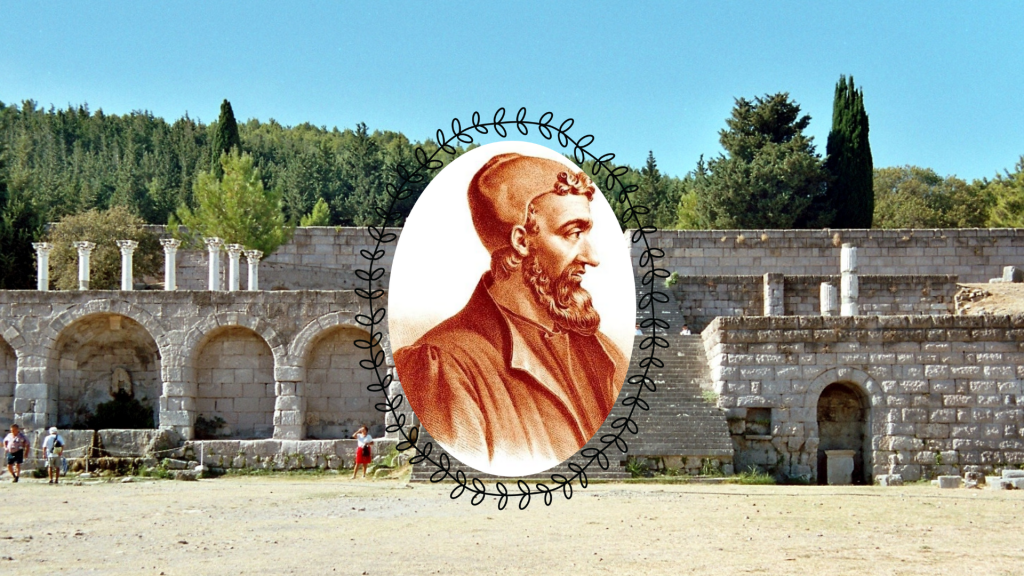
Galen was born in Pergamon (Bergama), one of the important cultural and scientific centres of Anatolia. The city was famous for its Asklepion (an ancient healing centre and early hospital dedicated to the health god Asclepius, where healing waters, dream interpretation, and various therapies were employed). His father, Nikon, was a successful architect and engineer who gave Galen a solid grounding in mathematics and logic as well as in Stoic philosophy (an ancient Greek school of philosophy based on living in harmony with virtue, reason, and nature). The foundations of Galen’s systematic and logic-driven thinking were laid here.
1.2. The Synthesis of Philosophy and Medicine: The Physician-Philosopher Ideal
Before beginning his medical training, Galen studied the four great philosophical schools of the period – Stoicism, Epicureanism (a philosophy also known as hedonism, holding that happiness is the highest good), Platonism (the philosophy based on Plato’s ideas of the world of forms and the immortality of the soul), and the Peripatetic school (the school following Aristotle’s philosophy grounded in logic and observation) – in depth. For him this was not merely an intellectual curiosity but a necessity to be placed at the very foundation of medicine. In his view, “the best physician is also a philosopher” (Optimo Medico eundem esse Philosophum – Latin: The best physician is also a philosopher). This ideal required the physician to concern himself not only with bodily symptoms but also with broader concepts such as human nature, the soul, and virtue. Philosophy offered the physician a means of distinguishing right from wrong, controlling his passions, and developing a sound moral compass.
1.3. Experiences as a Physician in Rome
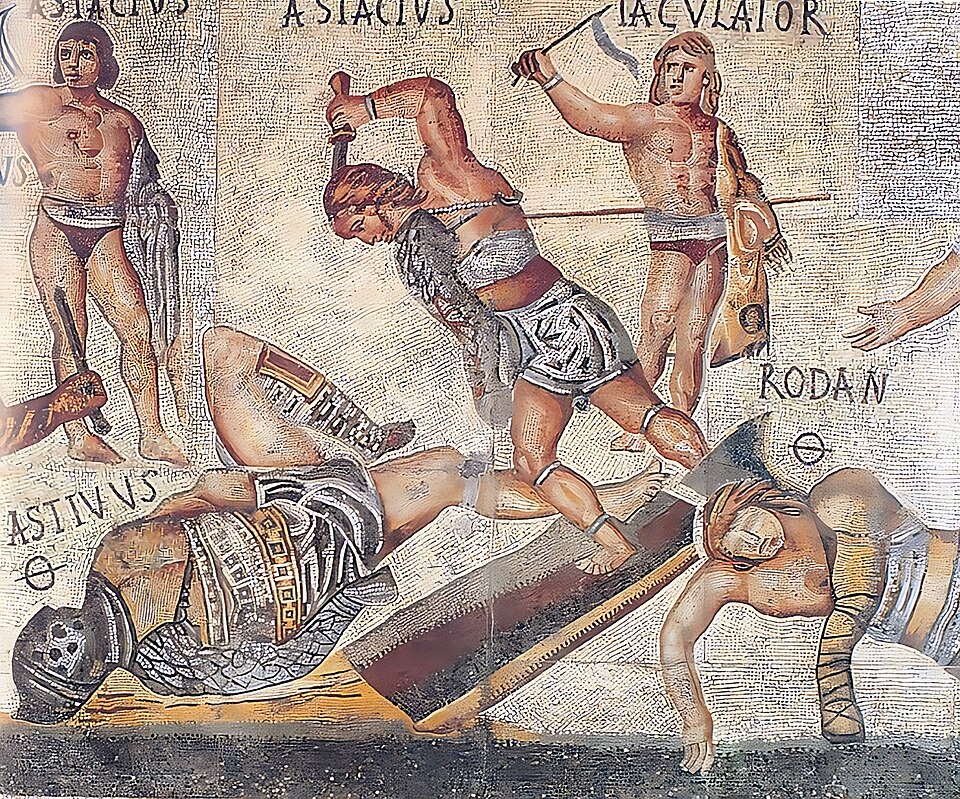
After completing his education, Galen travelled to Alexandria and subsequently settled in Rome, where he rapidly gained fame in the imperial capital. Yet Rome was also an ethical testing ground for him. An environment marked by ruthless competition, abundant charlatans, and high patient expectations led Galen to reflect and write on the tension between money, fame, and virtue in the practice of medicine. The period when he served as a physician to the gladiators not only provided him with unparalleled experience in traumatology but also helped him develop a profound ethical perspective on surgical skill, courage, and the responsibility to alleviate pain.
II. The Pillars of Galenic Medical Ethics and Its Hippocratic Roots
Galen regarded himself as a faithful follower of Hippocrates. In his opinion, Hippocrates had purged medicine of superstitious beliefs and magic and placed it on a rational foundation. Galen’s ethical understanding was profoundly influenced by the Hippocratic Oath and other texts of the Hippocratic Corpus (the body of works attributed to Hippocrates and his followers that collect the foundational texts of ancient Greek medicine). However, Galen took this foundation and made it more systematic, philosophical, and focused on personal virtue.
2.1. Commentaries on and Contributions to the Hippocratic Oath
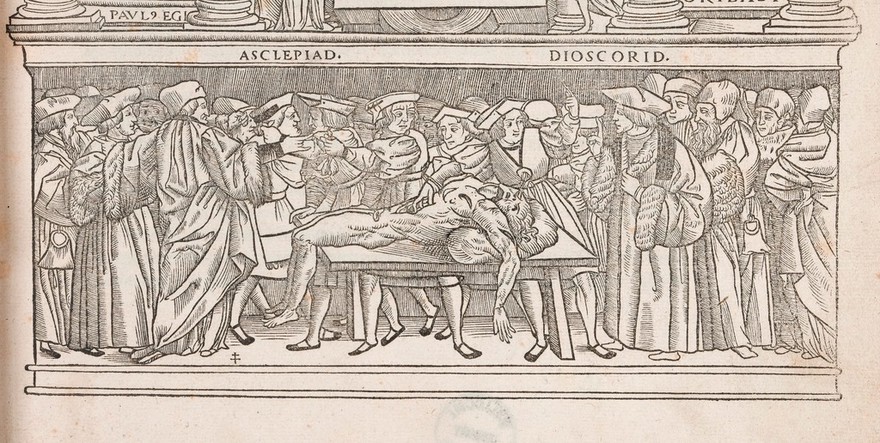
Galen penned commentaries on the Hippocratic Oath, seeking to explain how to apply its principles in daily practice. He particularly emphasised the following points:
- Non-Maleficence (Primum non nocere – Latin: First, do no harm): This principle at the heart of the Oath was, for Galen, the fundamental criterion of every medical intervention. He argued that the benefit of a treatment must unequivocally outweigh its potential risks.
- Confidentiality: Respect for patient privacy was a sine qua non of Galenic ethics. He stated that the physician must keep everything he hears from his patient a secret.
- Euthanasia and Abortion: He firmly supported the Oath’s clauses stating “I will not give a fatal drug” and “I will not give a woman a drug to procure an abortion.” For him, the physician’s role was to protect and sustain life.
2.2. The Unity of Theoretical and Practical Knowledge
Galen explicitly formulated a distinction that was implicit in the Hippocratic tradition: medicine is divided into the theoretical (epistēmē – Greek: knowledge, science) and the practical (technē – Greek: craft, skill, art of practice). A good physician must combine the two. Knowing only theory creates an inept healer; knowing only practice results in a blind practitioner unable to grasp cause-and-effect relationships. Galen’s ethical understanding rests upon this unity: doing what is right (ethics) is possible only through knowing what is right (science) and applying it correctly (skill).
III. The Four Principal Axes of the Galenic Ethical Framework
Galen’s medical ethics is shaped around four principal axes. Unlike modern codes of ethics, these focus more on the physician’s inner character and professional identity.
3.1. Axis 1: The Physician’s Character and Virtue – The Heart of Morality
For Galen, ethics is a matter of character rather than a list of rules. A prerequisite for being a good physician is being a good and virtuous human being. This rests on Plato’s four cardinal virtues:
- Wisdom (Sophia): Not merely medical knowledge but the practical wisdom to make correct decisions in diagnosis and treatment. The physician must not act hastily but must assess the situation in all its aspects.
- Courage (Andreia): The physician must not flee during epidemics, must be able to undertake difficult and risky operations to save a patient’s life, and, if necessary, speak the truth to powerful and influential patients.
- Temperance (Sōphrosynē): Refraining from extremes. The physician must be neither greedy nor fame-hungry. He must be reasonable when demanding fees and avoid luxury and ostentation. Galen fiercely criticised certain physicians in Rome who pursued excessive wealth.
- Justice (Dikaiosynē): The physician must not discriminate among his patients but must approach everyone – rich or poor, slave or free – with the same care and knowledge. He bears the responsibility of distributing resources fairly.
3.2. Axis 2: The Patient-Physician Relationship – An Alliance Based on Trust
In Galen’s eyes, the patient-physician relationship is an unequal yet mutually respectful and trust-based alliance. The elements shaping this relationship are:
- Trust (Pistis): The foundation of the relationship. The patient must trust the physician’s knowledge and intentions. Earning this trust is one of the physician’s most important duties.
- Compassion and Philanthropy (Philanthrōpia – Greek: love of humanity): The physician must understand his patient’s suffering and approach him with compassion. This is not a cold and distant professionalism but a human bond.
- Openness and Communication: Galen argued that the physician must explain the situation clearly to the patient in language he can understand. Yet he also acknowledged that “suggestion” and “hope” are part of treatment. Although different from modern “informed consent,” his emphasis on the importance of communication is noteworthy.
3.3. Axis 3: Professional Responsibility and Integrity
Galen regarded medicine as a sacred profession (technē hierē). This required a high level of professional responsibility.
- Self-Improvement and Continuing Education: A good physician never stops learning. Galen himself was a physician who continually read, researched, experimented, and thought critically.
- Meticulous Diagnosis: Galen stressed the importance of establishing a diagnosis. The physician must listen carefully to the patient’s history, observe the symptoms meticulously, and avoid hasty diagnoses. He embraced the understanding that “diagnosis is half the cure.”
- Acknowledging Mistakes: A physician may make a mistake, but what matters is that he acknowledges it and learns from it. Galen did not hesitate to speak of his own errors.
3.4. Axis 4: Scientific Integrity and Attitude Towards Rival Physicians
Galen possessed an extremely competitive and at times arrogant personality. This can be seen as a contradiction in his ethical portrait. He criticised rival physicians and pharmacists, particularly those he thought were in error, in extremely harsh language in his works. However, the underlying motivation behind these criticisms was usually the defence of “scientific truth.” In his view, an erroneous theory or practice was unacceptable because it would ultimately harm the patient. This situation parallels contemporary debates on “peer review” and “evidence-based medicine”: What is the limit of criticism? How does one strike a balance between scientific integrity and professional solidarity?
IV. Galenic Ethics in the Light of Modern Medical Ethics Principles
When we compare Galen’s virtue-oriented, physician-centred ethical understanding with modern bioethics, which is patient-rights-centred and principle-based, both striking similarities and profound differences emerge. Let us proceed through the four fundamental principles of modern bioethics (Beauchamp and Childress):
4.1. The Principle of Autonomy and Galenic Paternalism
Here lies the greatest difference between the two systems. Modern ethics emphasises the patient’s right to make decisions about his own body and health (autonomy). Informed consent is the principal application of this principle.
Galenic ethics, by its nature, is paternalistic (paternal; the belief that the physician, by virtue of his medical knowledge, should make decisions on behalf of the patient for the patient’s good). The physician, owing to his medical knowledge and wisdom, has the authority and responsibility to make the best decision for the well-being of his patient. The patient must trust the physician’s authority and comply with his recommendations. In Galen’s works, the idea of questioning the patient’s preferences or discussing the options with him is virtually absent. The physician is the one who “knows what is good.”
Contemporary Reflection: Although paternalism has been largely abandoned today, the physician’s assumption of responsibility – especially in emergencies, with paediatric patients, or with individuals who have limited decision-making capacity – is a reflection of the Galenic approach. Moreover, the “shared decision-making” model can be seen as a bridge between pure autonomy and pure paternalism, bringing together the physician’s wisdom and the patient’s values.
4.2. The Principles of Non-Maleficence and Beneficence
These two principles lie at the heart of Galenic ethics and are directly linked to the Hippocratic Oath. Galen argued that treatment must always be based on a clear risk-benefit balance. Risky procedures such as surgery should be undertaken only when a definite benefit is expected. His pharmacological work, which centred on drug dosage and side effects, was a practical reflection of the principle of non-maleficence.
Contemporary Reflection: The “evidence-based medicine” movement has precisely re-centred this very principle. The efficacy and safety of a treatment must be proven through randomised controlled trials. Galen’s experimental and observational rigour can be regarded as an early forerunner of modern clinical research.
4.3. The Principle of Justice
In the modern sense, the principle of justice concerns fairness and equality in the distribution of healthcare resources. Galen’s understanding of justice, however, was at a more individual level: to show the same care to every patient regardless of their status. He had no systematic theory regarding the development of a societal-level health policy or the distribution of resources. This is a limitation of his era.
Contemporary Reflection: Even so, it forms the historical basis of an ethical rule that still holds today: “the physician must not discriminate among patients based on their socio-economic status.”
V. Implications of Galen for Contemporary Medical Practice and Education
Galen’s voice, reaching us from 1,800 years ago, still echoes in the corridors of modern medicine.
5.1. The Balance of Technology and Humanism
Galen’s “physician-philosopher” ideal can offer an antidote to today’s excessive dependency on technology. However advanced MRIs and laboratory tests may become, the foundation of diagnosis still lies in listening to the patient’s story and trying to understand him as a whole. Galen reminds the physician that he must cultivate a philosophical stance and compassion in order to hear his patient’s “narrative.”
5.2. Burnout and Professional Identity
Modern physicians frequently experience burnout under administrative burdens, shift work, and intense pressure. Galen’s virtue-oriented ethical approach encourages seeing the practice of medicine not merely as a “job” but as a “way of life” and an “identity.” Virtues such as wisdom, courage, temperance, and justice can guide the physician not only in relations with patients but also on his own professional journey, providing meaning and resilience.
5.3. Ethics and the Humanities in Medical Education
Galen insisted that medical education should not consist solely of the biological sciences. The growing interest in the humanities (history of medicine, ethics, literature, philosophy) in medical schools today is a reflection of his “physician-philosopher” ideal. These disciplines equip future physicians with the skills of critical thinking, empathy, and the analysis of ethical dilemmas.
Conclusion: A Timeless Legacy
Galen of Pergamon’s understanding of medical ethics is a rich and multi-layered system that goes beyond rules and focuses on the physician’s character and intentions. Although it differs technically from the principle-based structure of modern medical ethics, with its emphasis on patient autonomy, both traditions converge in their ultimate goals: to look after the patient’s well-being and to protect the sacredness and dignity of the medical profession.
Galen reminds us that medicine is not only a “technē” (craft/skill) but also an “ars” (art). To practise this art, the physician needs not only manual and mental skills but also a refined moral intuition, compassion, and wisdom. Guided by a profound curiosity and respect for the human body and soul, this Galenic ideal will continue to remain a high standard to which every physician of every age should aspire.
Bibliography and Further Reading Suggestions
Primary Sources (Translations of Galen’s Works)
- Galen. On the Natural Faculties. (Trans. Arthur John Brock). Loeb Classical Library, 1916.
(Note: Galen’s fundamental views on physiology and the natural faculties.) - Galen. On the Passions and Errors of the Soul. (Trans. Paul W. Harkins). Ohio State University Press, 1963.
(Note: One of his most important ethical texts on the physician’s character development and control of the passions.) - Galen. On Prognosis. (Trans. Vivian Nutton). Corpus Medicorum Graecorum, 1979.
(Note: Contains valuable information about his experiences in Rome, the patient-physician relationship, and professional rivalry.) - Galen. Selected Works. (Trans. P. N. Singer). Oxford World’s Classics, 1997.
(Note: An excellent starting point, featuring selections from Galen’s works across various fields.)
Secondary Sources (Analysis and Commentaries)
- Boudon-Millot, V. Galen of Pergamum: A Greek Doctor in Rome. Les Belles Lettres, 2012.
(Note: A comprehensive biographical study of Galen’s life and works.) - Hankinson, R. J. (Ed.). The Cambridge Companion to Galen. Cambridge University Press, 2008.
(Note: A fundamental reference work addressing Galen’s understanding of philosophy, science, and medicine from the perspectives of various experts.) - Mattern, S. P. The Prince of Medicine: Galen in the Roman Empire. Oxford University Press, 2013.
(Note: Presents Galen’s life and practice in Rome with a vivid narrative.) - Temkin, O. Galenism: Rise and Decline of a Medical Philosophy. Cornell University Press, 1973.
(Note: A classic work examining the historical impact of Galenic medicine.) - Von Staden, H. “Character and Competence: Personal and Professional Conduct in Greek Medicine.” In Hippocrates in Context, edited by P. van der Eijk, 2005.
(Note: Examines the concept of ethics and character in ancient medicine, giving considerable attention to Galen.)
Turkish Sources
- Demir, Ömer Mustafa. Antik Çağ’dan Günümüze Tıp Etiği [Medical Ethics from Antiquity to the Present]. İstanbul Tıp Kitabevi, 2020.
(Note: Provides a general overview of the history of medical ethics, dedicating sections to Hippocrates and Galen.) - Arda, Berna & Şahinoğlu, Pelin S. Biyoetiğe Giriş [Introduction to Bioethics]. Ankara Üniversitesi Yayınları, 2018.
(Note: A fundamental Turkish-language source explaining the principles of modern bioethics.) - Umur, Sinan. “Hipokrat ve Galenos: İki Üstad, İki Farklı Yaklaşım” [Hippocrates and Galen: Two Masters, Two Different Approaches]. Tıp Tarihi Araştırmaları Dergisi [Journal of Medical History Research], Vol. 10, 2006.
(Note: An academic article comparing the methodologies of the two physicians.)
Online Sources
- Stanford Encyclopedia of Philosophy: “Galen”
(Note: A comprehensive and reliable introduction to Galen’s philosophical views.) - U.S. National Library of Medicine: “Galen”
(Note: A digital exhibition also featuring historical manuscripts and portraits.) - Wellcome Collection: “Galen”
(Note: Articles and resources on Galen’s legacy and his place in the history of medicine.)
⚖️
License and Copyright Notice
Media usage rules
Check the license/copyright information for all media files (images, videos, audio, documents, etc.) included in this content from the relevant work descriptions.
📚 Read the Terms and Conditions