

James Ellsworth De Kay’s Sketches of Turkey: An American Traveler Defying Orientalism and Philhellenism in 1830s Istanbul
Explore how American doctor James Ellsworth De Kay’s 1833 travelogue Sketches of Turkey challenged 19th-century Orientalism and Philhellenism, offering a unique portrait of Ottoman Istanbul under Mahmud II.
ABSTRACT
19th-century travelogues often served as the carrier columns of the West’s condescending “Orientalist” discourse toward the East. However, Sketches of Turkey in 1831 and 1832, published anonymously in New York in 1833, throws a sharp stone at this tradition. Its author, James Ellsworth De Kay, was a doctor, a naturalist, and a rebellious American expelled from Yale University. This article delves deeply into De Kay’s secret diplomatic and commercial mission in Istanbul, his unique testimony of Mahmud II’s reforms, his perspective on the social life of the period (from street dogs to fires), and his provocative “Turcophile” stance against the Western current of “Philhellenism,” which drew considerable backlash.
INTRODUCTION: A “Foreigner” at the Threshold of the East
On a misty morning in 1831, an American ship cutting through the waters of the Bosphorus carried on its deck not only commercial goods but also a keen observer. At that time, Istanbul was a colossal chessboard that European politics called the “Eastern Question.” As the British, the French, and the Russians lay in ambush to divide the legacy of the Ottoman Empire, which they saw as the “Sick Man,” a new player was stepping onto the stage from across the Atlantic: the Americans.
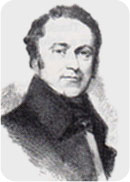
Among these new players was James Ellsworth De Kay, notebook in hand and a curiosity in his mind that was free of (or at least ready to question) the prejudices imposed by Europe. When De Kay arrived in Istanbul, the city was experiencing one of the greatest breaking points in its history. Only five years had passed since the bloody abolition of the Janissary Corps (the Auspicious Incident, 1826). Sultan Mahmud II was racing against time to modernize the empire; turbans were being replaced by fezzes, caftans by frock coats, and centuries-old traditions were giving way to Western institutions.
Most European travelers (for instance Lamartine or Chateaubriand) preferred to depict Istanbul as a romantic ruin, an exotic décor stuck in the past. For them, the East was passive and static. However, De Kay’s narrative rejects this static tableau. He sees a living, breathing, suffering, and changing dynamic society. The book he published in 1833 under the signature “An American” is not merely a collection of travel notes, but also a sociological analysis and a text of defense written against the Western public opinion of the era.
CHAPTER 1: The Man Behind the Mask
The Doctor and Naturalist Expelled from Yale
To understand James Ellsworth De Kay, one must look at his turbulent past before arriving in Istanbul. Born in Lisbon in 1792, De Kay was the child of a cosmopolitan family. Yet his character was too unruly to fit into the sterile corridors of academia.
His student years at Yale University ended with an incident that would determine the course of his life. During a dispute at a meeting of the university’s “Linonian Society,” he threatened a faculty member with a stick, causing his academic career to end at that point with his expulsion. This incident reveals two fundamental traits of De Kay’s character: rebellion against authority and a passionate, sometimes aggressive temperament.
Although the Yale chapter was closed, the chapter of science was not. He studied medicine in Edinburgh and turned to natural sciences (particularly zoology). His training as a scientist also shaped the language of his travelogue. He approaches events not with poetic romanticism but with the cool-headedness of a surgeon and the classifying curiosity of a biologist. A bird he sees in Istanbul is not just a “beautiful bird”; it is a piece of data with its species, behavior pattern, and place in the ecosystem.
The actual bond that drew him to Istanbul was his marriage. Marrying Janet, the daughter of Henry Eckford, one of the most famous naval engineers of the era, placed De Kay at the heart of the American maritime industry and diplomacy.
CHAPTER 2: The Secret Mission and the Eckford Tragedy
Diplomacy, Commerce, and Suspicion
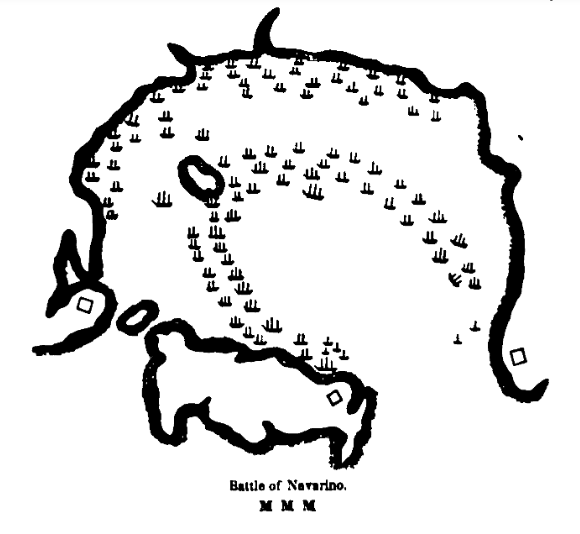
De Kay’s visit to Istanbul was not a touristic whim. It was a result of the Ottoman Empire’s quest to rebuild its naval power after its fleet was destroyed at the 1827 Battle of Navarino. Sultan Mahmud II did not trust the British or the French, and was looking to the rising power of America as an alternative ally.
James De Kay arrived in Istanbul with his father-in-law Henry Eckford aboard the 1,000-ton corvette United States, which had been built to be sold to the Ottomans. This journey was a semi-official commercial venture rather than an official diplomatic mission. Eckford was received with great favor by the Sultan and was offered the position of heading the Ottoman Naval Shipyard (Tersane-i Amire) to modernize the imperial navy. The prospect of an American taking the helm of the Empire’s most strategic military institution horrified the British and Russian ambassadors in Istanbul at the time.
However, this great dream ended darkly. Shortly after commencing his work, Henry Eckford suddenly fell ill and died in November 1832. Although official records state cholera or a stomach infection, a deep paranoia can be sensed between the lines of De Kay’s writings and in his subsequent letters. He believed his father-in-law had been poisoned by “certain powers” (often implied to be British intelligence) that did not want the strengthening of the Ottoman Empire. This tragedy cast a mournful and suspicious air over De Kay’s Istanbul days but did not dull his powers of observation. On the contrary, his anger toward Western powers may have laid the groundwork for him to approach the Turkish people and the Ottoman state with more sympathy.
CHAPTER 3: Viewing the “Other” and Subverting Clichés
Honesty, Morality, and the Bazaar
The most striking aspect of De Kay’s book is that it demolishes the entrenched Western image of the “lying, thieving, barbaric Turk.” De Kay cannot hide his astonishment at the scenes he witnesses while wandering through the bazaars of Istanbul.
He recounts the following anecdote in his book: When prayer time arrives or an urgent matter arises, a shopkeeper does not lock his door but merely draws a net or a symbolic rope across it. The goods inside are in plain sight, yet no one touches them. De Kay compares this with the theft rates in “Christian” European and American cities and concludes: In Ottoman society, there is a tremendous, unwritten moral contract that everyone abides by.
This observation is revolutionary for its time. Because Orientalist literature tends to explain the moral inferiority of the Easterner through “climate” or “religion.” De Kay, however, acknowledges this moral superiority. He praises the hospitality of the Turks, the respect shown to foreigners, and the dignity of daily life. For him, Turks are “quiet, dignified, and honorable” people. This tranquility, contrasting with the noisy and frantic life of Westerners, fascinates De Kay.
CHAPTER 4: The Naturalist in the City
Street Dogs, Birds, and Nature
With his identity as a medical doctor and a naturalist, James De Kay examines the streets of Istanbul as if they were a laboratory. Istanbul’s famous street dogs attracted the attention of almost every traveler, but De Kay observes them with a scientific eye.
He describes the distribution of dogs in the city as a “territorial” organization. Each neighborhood has its own pack of dogs, which jealously guard their borders. When a dog enters the boundary of another neighborhood, it is collectively chased away by that area’s dogs. De Kay notes with amazement that although these animals are ownerless, they are fed by the public and that food and water are left at street corners for pregnant female dogs. At a time when “stray” animals were culled in the West, this “co-existence culture” in Istanbul is, for De Kay, an indicator of civilization.
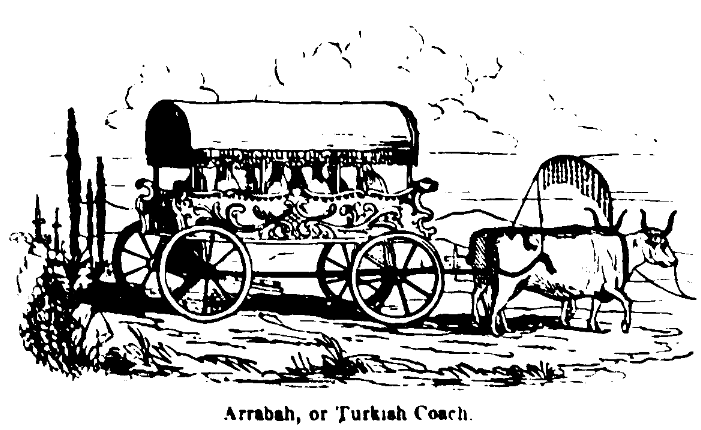
He pays the same attention to birds. He describes the nests built for birds under the eaves of houses and in mosque courtyards, and the storks atop the cypress trees in cemeteries. He implies that the relationship Turks establish with nature is based on “harmonizing with nature,” rather than the Western desire to “dominate nature.” Furthermore, his analyses of the geological structure, currents, and vegetation of the Bosphorus turn his book not only into a cultural but also a geographical document.
CHAPTER 5: Fire and Plague
Resignation and Precaution in the Face of Disasters
19th-century Istanbul struggles against two great enemies: fires and epidemics. De Kay witnesses the great 1831 Pera (Beyoğlu) fire and other fires large and small. He recounts with horror how a single spark can swallow entire neighborhoods within seconds in a city dominated by wooden architecture. Yet even here, he makes a sociological observation: the organization of the firemen (tulumbacılar), the signals given from the fire towers, and the solidarity of the people during a fire.
As a medical doctor, his approach to plague and cholera epidemics is even more critical. At that time, “quarantine” practices were just beginning to be discussed in the Ottoman Empire. Although De Kay seems to criticize the “fatalistic” attitude of the populace towards the epidemics, he tries to understand the belief system underlying it. He points out that while Westerners fled from the epidemic to isolate themselves, abandoning their sick, Turks continued to care for their patients, accepting death as a natural part of life. Nevertheless, he supports the efforts of Mahmud II to establish a modern quarantine organization and the medical reforms in this regard.
CHAPTER 6: Winds of Change
The Fez, the Setre Coat, and Mahmud II
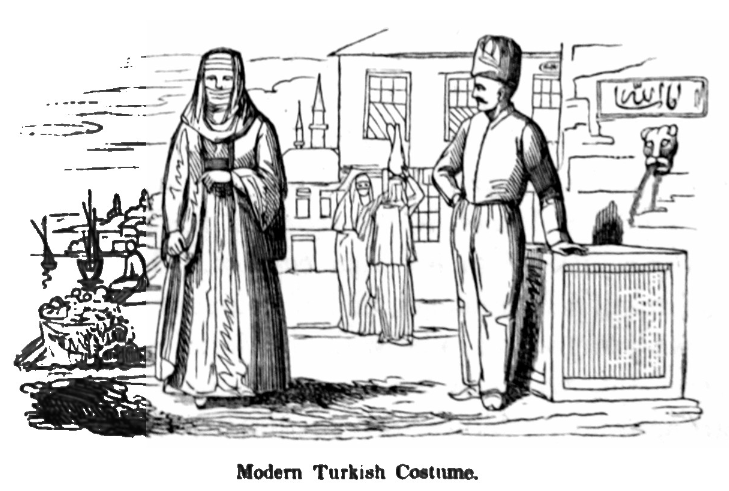
De Kay’s Istanbul is an arena where the “Old” and the “New” fiercely clash. The author reads this conflict most clearly through attire. With the dress code regulation issued by Sultan Mahmud II in 1829, it became mandatory for civil servants to wear the fez, trousers, and jacket (setre) instead of turbans and robes.
As he describes this new type of “Ottoman Gentleman” seen on the streets of Istanbul, De Kay sometimes smiles at the aesthetic incongruity of this change (baggy trousers, mismatched jackets), but respects the will behind the transformation. For him, this is not just a change of form but a revolution of mindset.
His encounter with Sultan Mahmud II is one of the pinnacles of the book. He portrays the Sultan—depicted as a “bloody tyrant” in the Western press—as an energetic, charismatic leader whose eyes sparkle with intelligence, who rides horses, inspects his soldiers, and strives to pull his empire back from the brink. De Kay compares Mahmud to Peter the Great of Russia; he sees him as a reformist trying to modernize his country, even by force.
CHAPTER 7: The Great Controversy and Criticisms
An “Anti-Hellenic” Manifesto against Philhellenism
Why did James De Kay’s book cause such an uproar when it was published? The answer lies in the political atmosphere of the 1830s. Europe and America were swept up in a strong wave of Philhellenism during those years. Greece’s independence from the Ottoman Empire (1830) was celebrated in the West as the “revival of Ancient Greek civilization” and the “triumph of Christianity over Islam.” Romantic poets like Lord Byron had died for this cause, and public opinion had codified the Greeks as “innocent victims” and the Turks as “cruel masters.”
In his book, De Kay turned this narrative on its head, stirring up a hornet’s nest. Based on his observations, he claimed the following:
- The Character of the Greeks: De Kay criticized the Greek population of Pera and Galata for their cunning in commercial life, their unreliability, and their scheming nature. He defined them as an element that disturbed the peace of Ottoman society and acted as a pawn of Western powers. Statements along the lines of “A Turk’s word is his bond, but when trading with a Greek you must think ten times” were shocking to Western readers.
- Turkish Rule: He argued that the minorities living under Turkish rule were not subjected to constant persecution, as claimed, but rather enjoyed extensive religious and commercial freedoms.
Because of these views, De Kay faced severe criticism in the British and American press. Critics of the time (for example, the North American Review) accused him of being “bribed or flattered by the Turks,” of “naivety,” and “blindness.” Some even claimed he praised the Turks to protect his father-in-law’s commercial interests. Yet De Kay did not back down; he continued to argue that the truth he saw was different from the fairy tale told in the West.
CONCLUSION: The “American” Footnote to History
James Ellsworth De Kay’s Sketches of Turkey in 1831 and 1832 is not a commonplace travelogue left to gather dust on shelves. This work is one of the rare breaches opened in the wall of perception between East and West at the beginning of the 19th century.
The author transformed the rebellious young spirit expelled from Yale into the meticulousness of a scientist “seeking the truth” on the streets of Istanbul. His book is a historical document witnessing the modernization pangs of the Ottoman Empire; a sociological one for recording the humane values of Turkish society (love of animals, honesty, hospitality); and a political one for exposing the two-faced politics of the West.
For us today, De Kay is a friendly voice reaching out from 190 years ago, patting the street dogs of Istanbul, grieving for the burning wooden houses, and trying to shout to the world how truly “civilized” those people called “barbarians” really were. His “Sketches” continue to restore that old picture of Istanbul, erased by time, in our minds with the most vivid colors.
Visual Notes from History: The De Kay Album
BIBLIOGRAPHY AND FURTHER READING
The following fundamental sources and academic studies were utilized in the preparation of this article:
Primary Source
- De Kay, James Ellsworth. Sketches of Turkey in 1831 and 1832. New York: J. & J. Harper, 1833. (Harvard University Library Digital Archives and Internet Archive).
Biographical and Historical Sources
- Erhan, Çağrı.Türk-Amerikan İlişkilerinin Tarihsel Kökenleri [Historical Origins of Turkish-American Relations]. Ankara: İmge Kitabevi, 2001.
- (Note: Diplomatic background of Henry Eckford and De Kay’s mission).
- Kuneralp, Sinan. Turco-American Relations: 1800-1914.
- Yale University Archives. “History of the Linonian Society regarding James E. De Kay”.
- (Note: Records regarding the incident of his expulsion from Yale).
Period Analysis
- Berkes, Niyazi.Türkiye’de Çağdaşlaşma [The Development of Secularism in Turkey]. İstanbul: YKY [Yapı Kredi Publications].
- (Note: Context of Mahmud II’s reforms).
- İnalcık, Halil & Quataert, Donald.Osmanlı İmparatorluğu’nun Ekonomik ve Sosyal Tarihi [An Economic and Social History of the Ottoman Empire].
- (Note: 19th-century commercial life and minorities).
Related Literary Works (For Comparison)
- Pardoe, Julia.The City of the Sultan.
- (Note: Observations of a British female traveler from the same period).
- von Moltke, Helmuth.Türkiye Mektupları [Letters from Turkey].
- (Note: A military perspective).
⚖️
License and Copyright Notice
Media usage rules
Check the license/copyright information for all media files (images, videos, audio, documents, etc.) included in this content from the relevant work descriptions.
📚 Read the Terms and Conditions