

19th-Century Istanbul Through the Eyes of Allom and Walsh: Engravings and an Orientalist Perspective
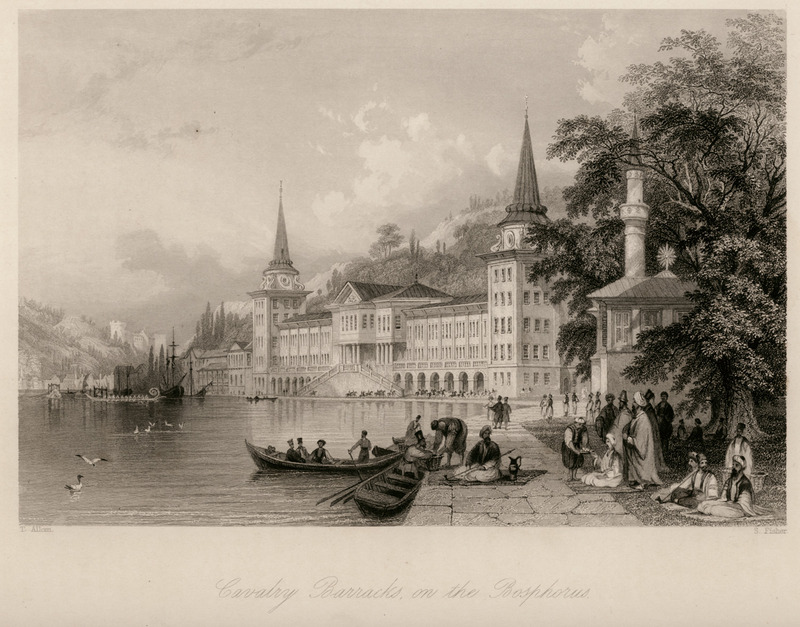
1830s Istanbul is, in every sense, a city of transition. It has not been long since Sultan Mahmud II abolished the Janissary Corps, and the empire has begun taking rapid steps toward a Western-style model of governance and society. While European travelers observe this transformation with curious eyes, they also do not hide their apprehension about the disappearance of the old visage being left behind. Constantinople and the Scenery of the Seven Churches of Asia Minor, prepared collaboratively by Thomas Allom and Robert Walsh, is a work that emerged precisely to document this moment of transition. Walsh explicitly states this in the preface: While Asia remains unchanged, European Turkey, and particularly Istanbul, has awakened from its centuries-long stagnation and is rapidly Europeanizing. The author worries that the old city of caftans and turbans will soon turn into an ordinary European town; the book is the product of an effort to commit this fleeting appearance to paper.
An Architect’s Test with the East: Thomas Allom
Thomas Allom is a London-born architect born in 1804; his signature can be found on buildings like St. Peter’s Church in Notting Hill. During his journey to the East in 1836-1837, however, he applies his pencil to paper rather than stone. Although he values proportion and geometry with the habit of an architecturally trained eye, this strict discipline is occasionally seen to soften when drawing Istanbul. The misty light of the Bosphorus slightly blurs the sharp lines; the result is a series of landscapes that reflect the atmosphere of the city at that time, rather than a technical architectural plan. In Allom’s engravings, Istanbul is not merely composed of buildings; it is depicted as a city standing on the threshold of change, having not yet severed its ties with its past.
The Author of the Text: Reverend Robert Walsh
The text accompanying the engravings was penned by Reverend Robert Walsh, born in Ireland in 1772. Walsh is a clergyman who lived in Istanbul intermittently between 1821 and 1835, knew the city, but—like many travelers of his era—could not evaluate it outside his own cultural framework. To Allom’s drawings, which are shaped by architectural observations, Walsh adds his commentary written from a Christian and Western perspective. This collaborative work, published by Fisher, Son & Co., became one of the most widely read Ottoman albums of its time.
The Tophane Fountain and the Boats of the Bosphorus
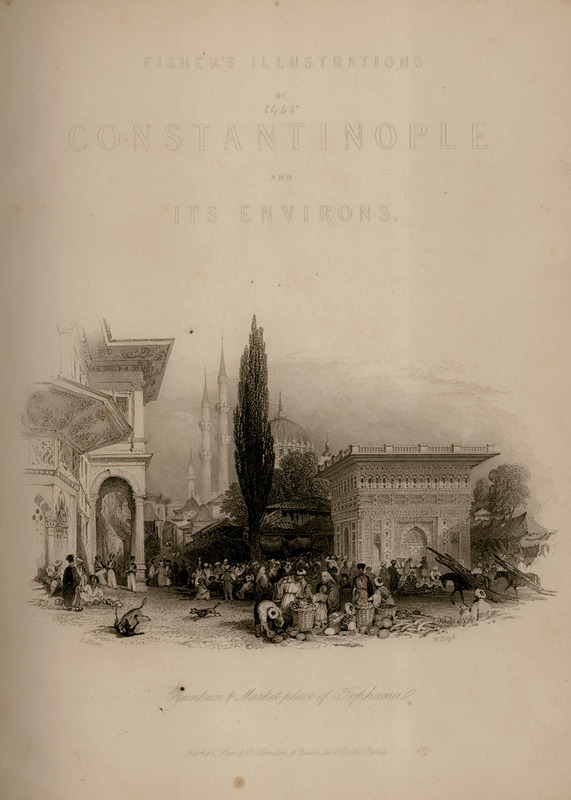
One of the engravings in the book focuses on the Tophane Fountain, dated 1732. Walsh finds it remarkable that small hollows were carved into the stone of the fountain specifically for stray animals and birds to drink from; he records this detail as something done almost with a religious sense of duty. In the same section, the light boats (kayıks) crossing the Bosphorus are also mentioned. These small vessels glide swiftly among large naval ships in the harbor’s busy traffic; they stand out in Allom’s drawing as a simple yet effective detail illustrating the city’s daily dynamism.
The Letter-Writer Engraving: The Difference Between Appearance and Reality
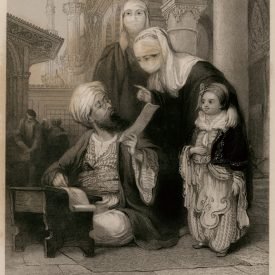
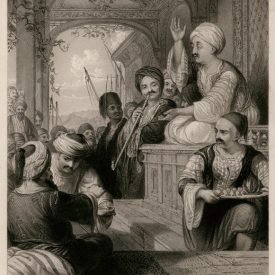
The first engraving we selected from the collection is titled Letter-writer in Istanbul. We see a petition-writer (arzuhalci) sitting in a narrow street, probably in the shadow of a mosque courtyard, and a small crowd gathered around him. Walsh’s text interprets this scene as the desperation of a populace that cannot read or write and cannot put their troubles on paper—this is a perspective frequently encountered in the European travel literature of the period, equating the East with backwardness.
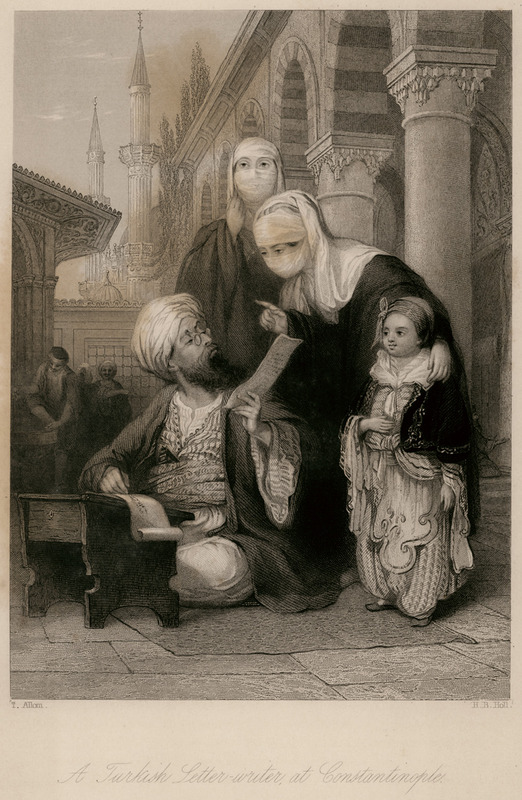
However, the profession of the letter-writer in the Ottoman Empire is not merely a compensation for a lack of literacy. The writing styles used in official correspondence, such as divani or rika, have special rules and a heavy terminology that even an ordinary literate person could not easily decipher. The letter-writer is a kind of legal consultant who knows this technical language and builds a bridge between the public and the Sublime Porte (Bâb-ı Âli) or the courts. In this respect, the crowd in the engraving is not desperate, but consists of people who know how to communicate with the state through official channels and are familiar with the system. Walsh’s interpretation remains superficial because he does not understand the institution before him.
The Maiden’s Tower: Two Different Narratives
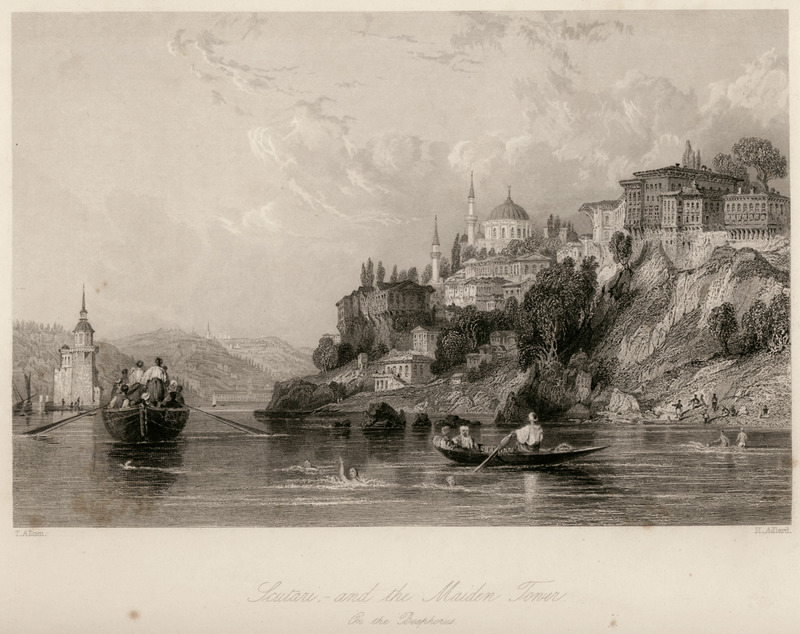
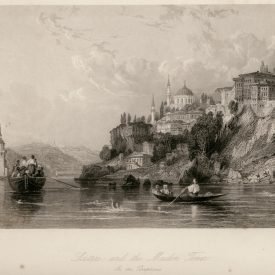
The second engraving focuses on the Maiden’s Tower (Kız Kulesi, referred to in the book as The Tower of Leander) in the middle of the Bosphorus. Allom successfully conveys the movement of the waves and the struggle of the boatmen. Walsh, on the other hand, immediately connects the name of the structure to the legend of Hero and Leander—however, this ancient story is related to the Dardanelles (Çanakkale Strait) and has no direct connection to the tower in the Istanbul Bosphorus. This is a typical example of the traveler’s tendency to situate the geography he sees within his own cultural references.
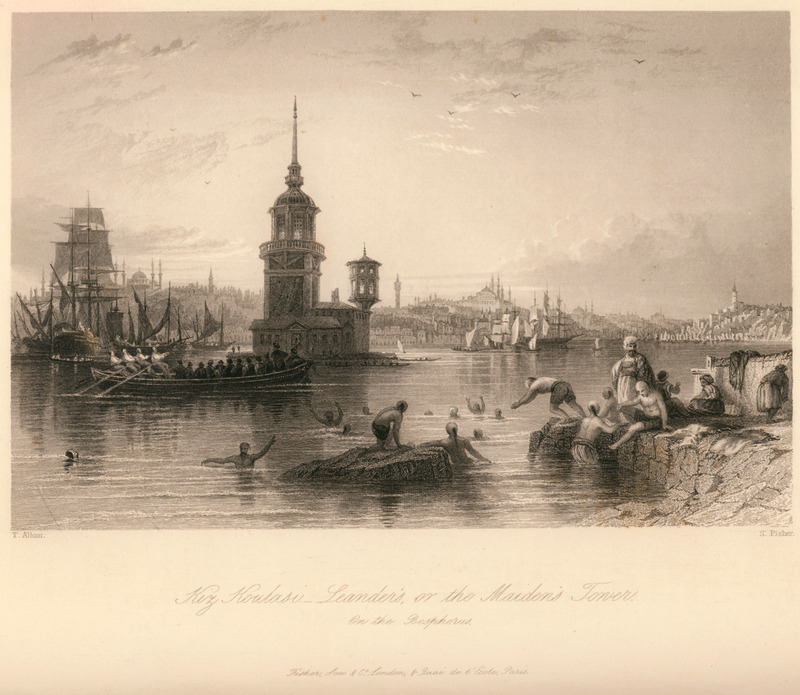
In the Ottoman tradition, the tower carries a different meaning: it is part of a local legend about the impossibility of escaping fate and humanity’s helplessness in the face of divine will. Two cultures looking at the same structure produce vastly different stories—one relies on ancient mythology, the other on a folk narrative themed around submission to destiny (tevekkül).
Yedikule and the “Terrible Turk” Image
The third engraving shows the Yedikule dungeon at the point where the land walls meet the Sea of Marmara. This structure, which also encompasses the Golden Gate of the Byzantine period, is one of the well-known prisons of the Ottoman Empire. Here, Walsh’s text is penned in a language that feeds the “Terrible Turk” image prevalent in the Europe of that era; the fact that diplomats arrested during wartime were held here turns the place into a symbol of injustice.
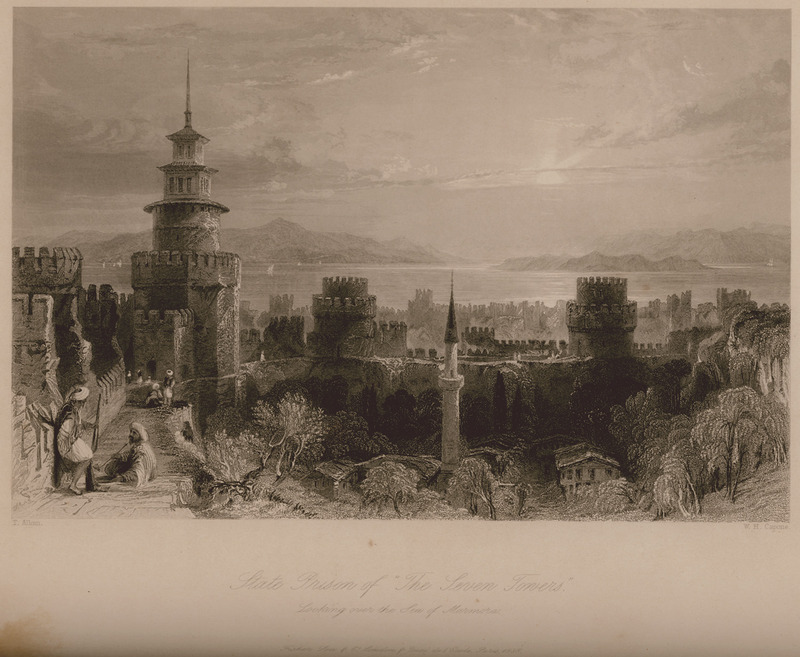
Of course, Yedikule is a prison, and with this identity, it is not an ordinary place. But the detention of diplomats during wartime was a common practice in the international relations of the period and was not unique to the Ottomans. Moreover, by the time Allom and Walsh prepared their work, this practice had already been abandoned during the reigns of Selim III and Mahmud II. The dramatic narration in the text serves to feed a prejudice that had become entrenched in Europe rather than reflecting the current situation.
The Sultan Ahmed Mosque and a Misconception About Gravestones
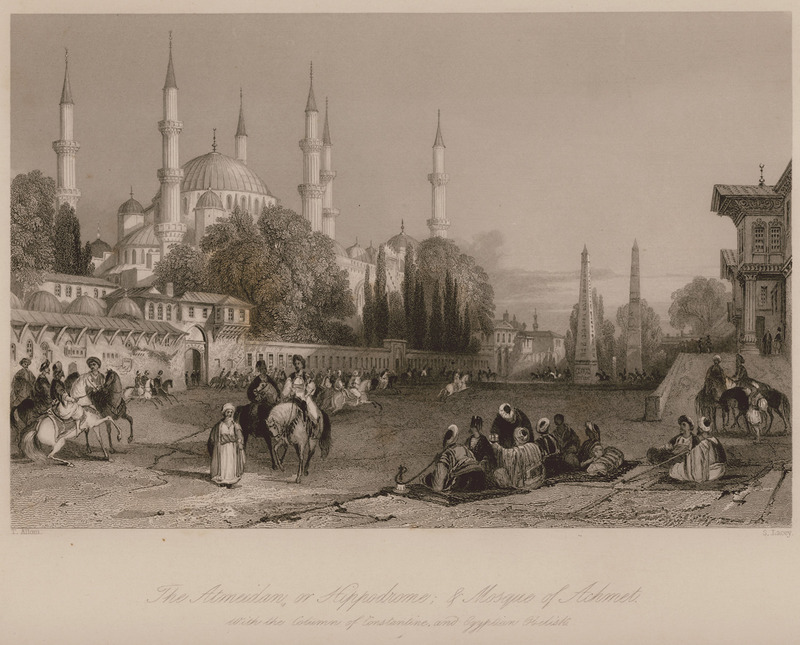
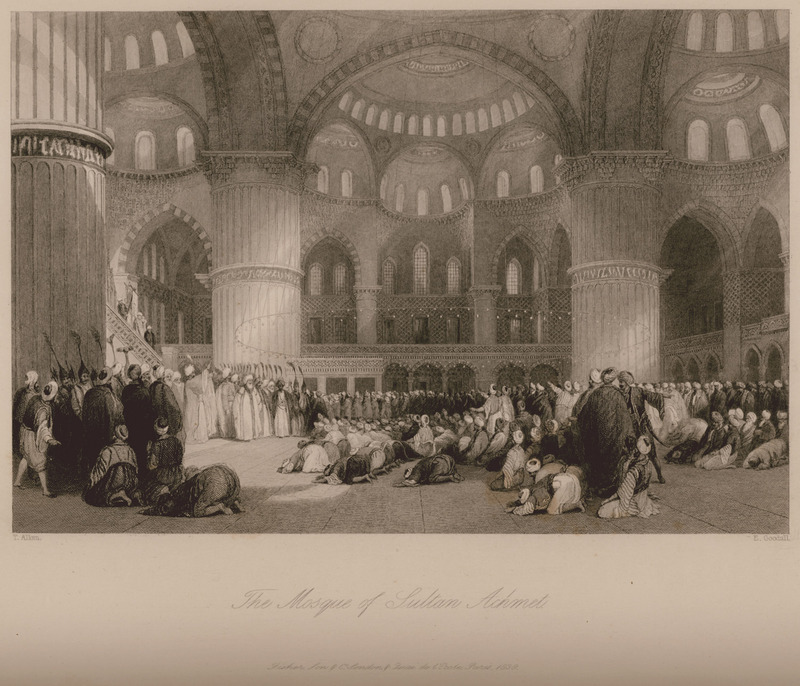
The six minarets of the Sultan Ahmed Mosque stand out as a dominant element of the city’s silhouette in Allom’s drawing. In the face of such grand architectural works, Walsh’s text is also written in a respectful tone; nevertheless, his tendency to compare the mosque with Gothic cathedrals shows that he could not fully grasp the aesthetics of Islamic architecture, which avoids figures and is based on an abstract understanding of tawhid (the oneness of God).
Conclusion
What Allom and Walsh feared most—Istanbul turning into a uniform European city—has largely come to pass today. But such remaining albums show not only a picture of the past but also the limits of the Western perspective of that era. When looking at the engravings, we see both the state of the city at that time and realize through which cultural filter this image has passed. Being able to distinguish the two is the key to reading the work more accurately.
A Visual Journey to 19th-Century Istanbul
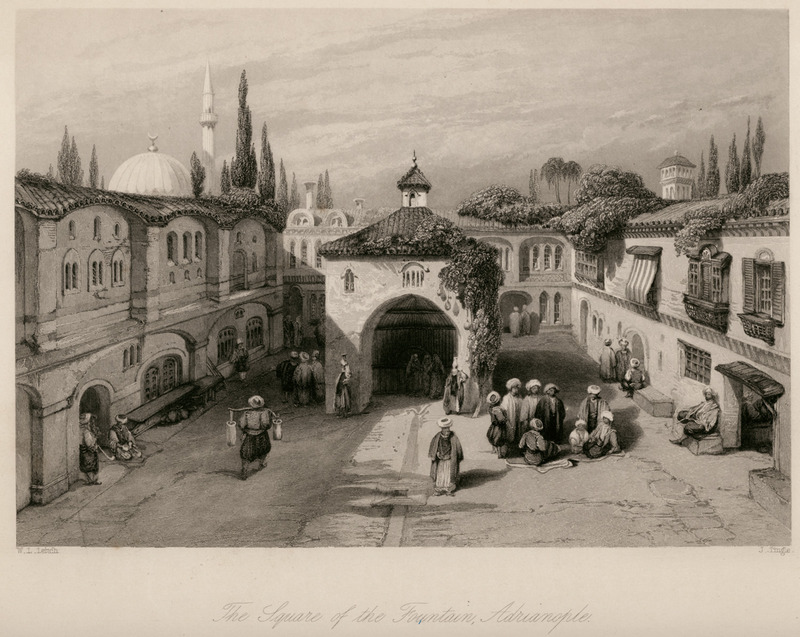
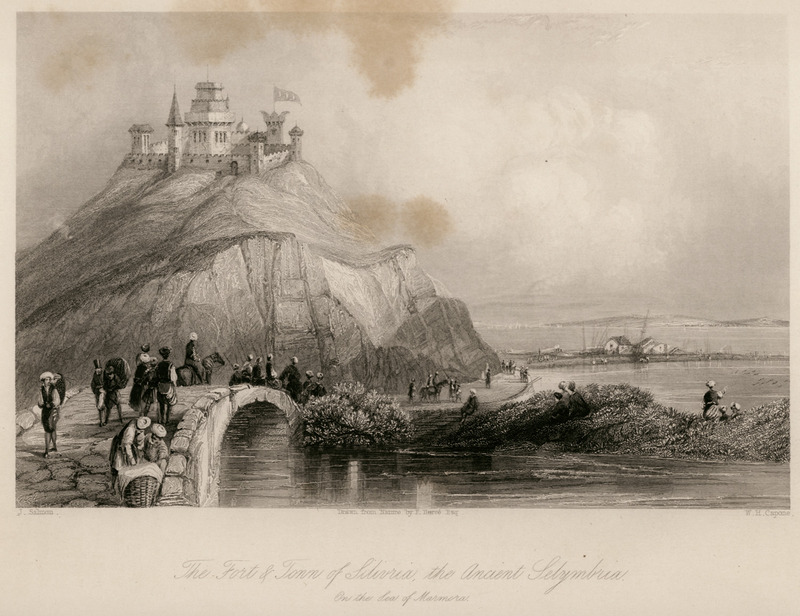
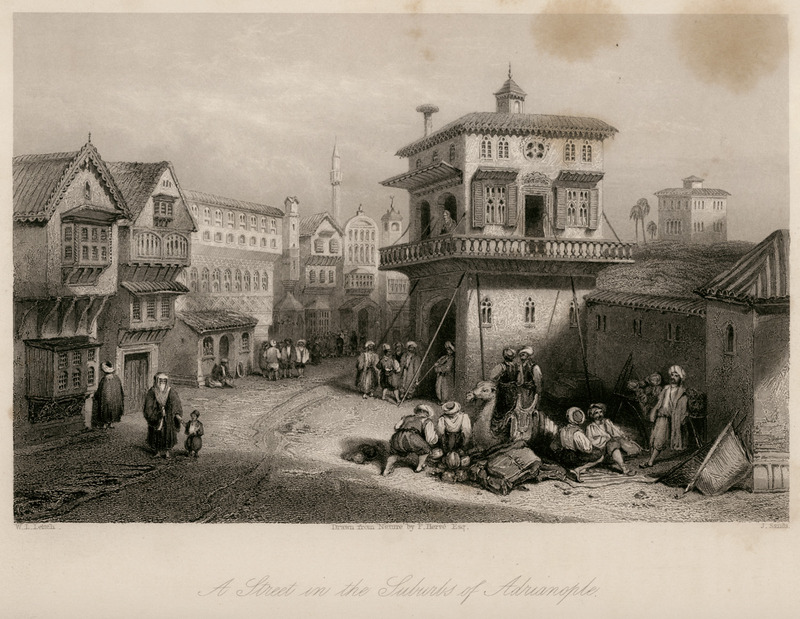
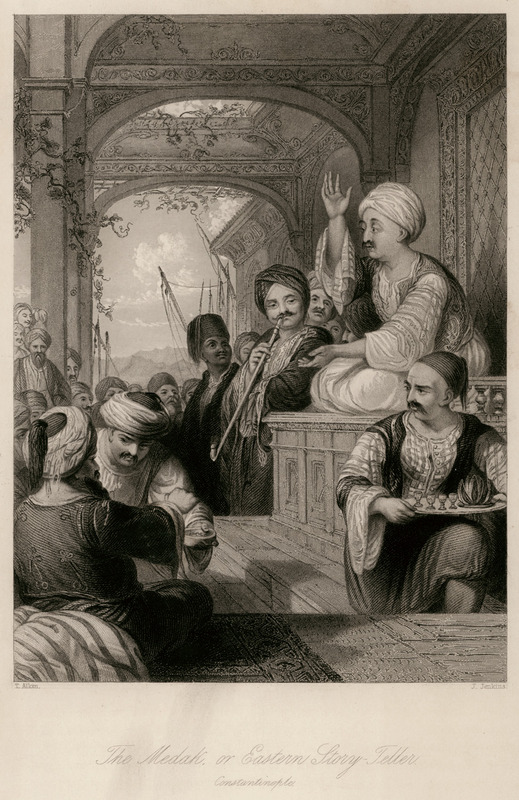
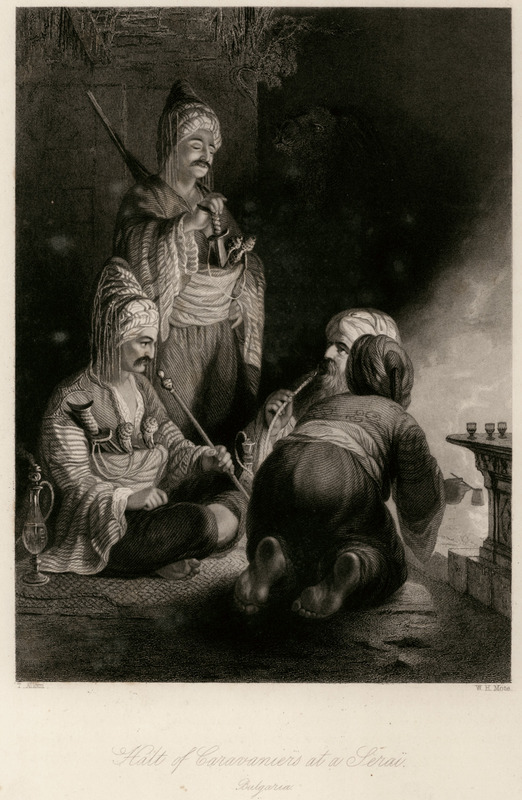
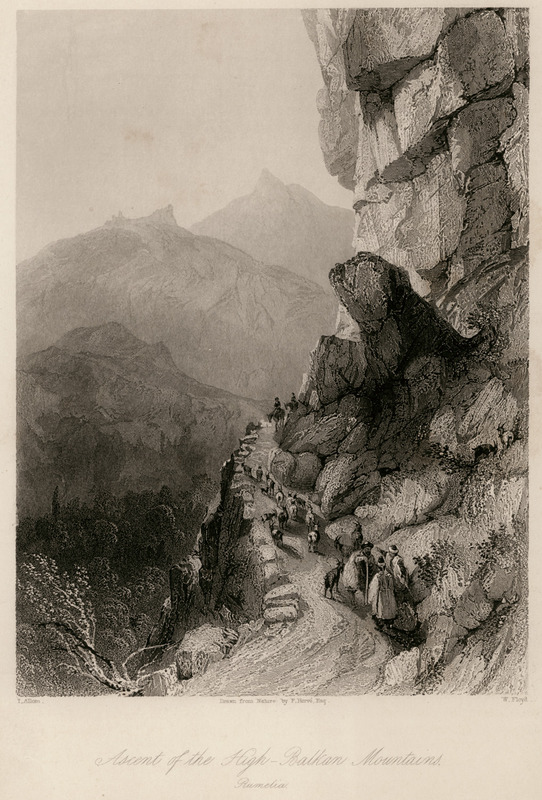
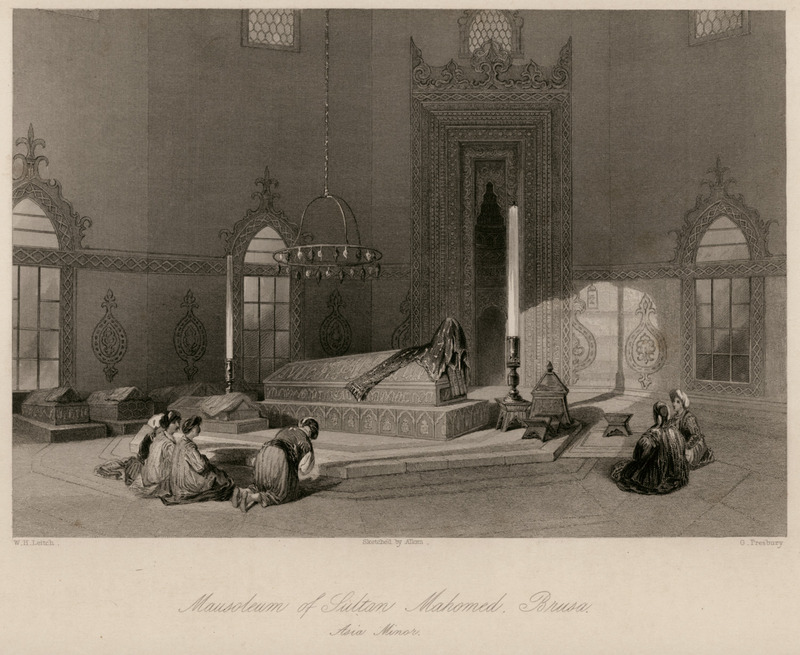
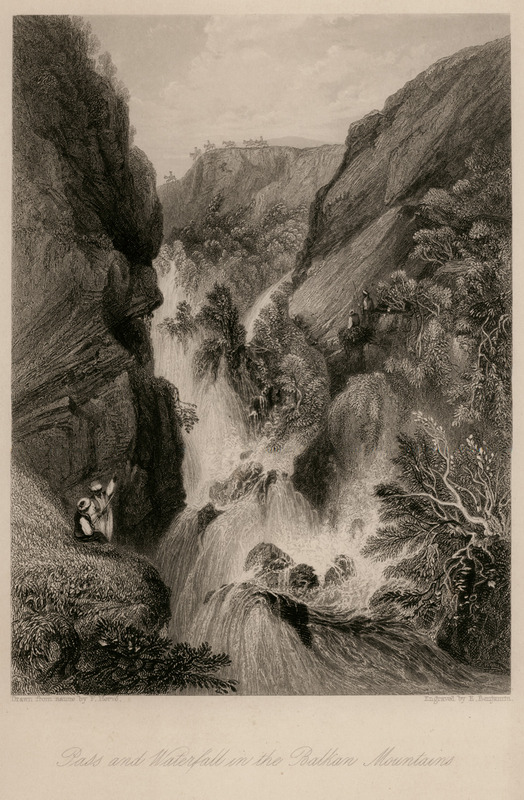
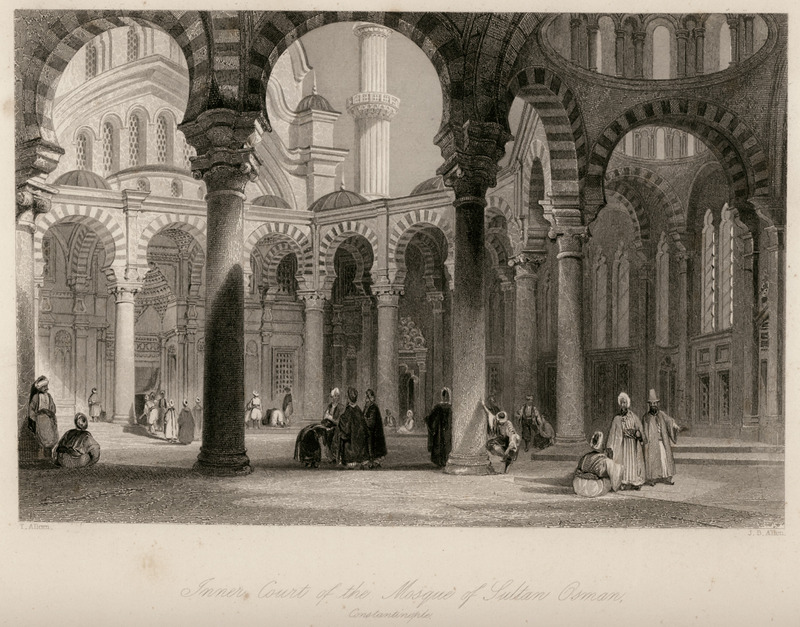
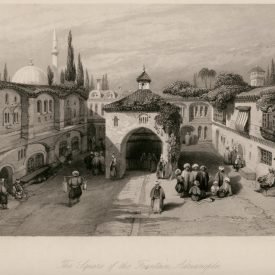
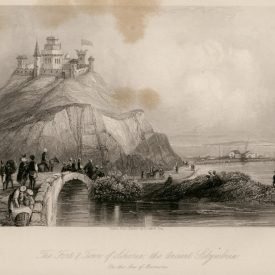
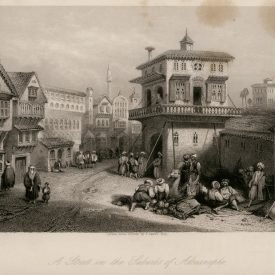
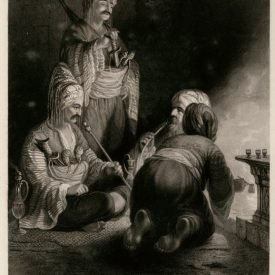
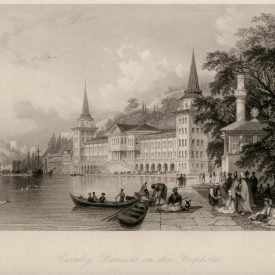
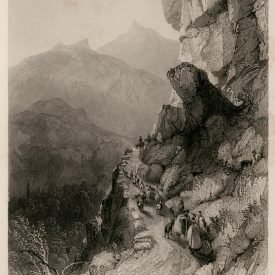
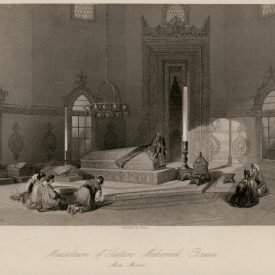
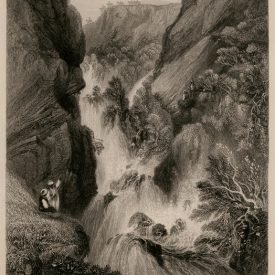
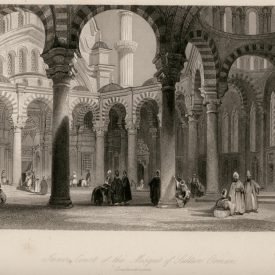
Below is a small selection of the engravings brought to life by Allom’s lines in the work Constantinople and the Scenery of the Seven Churches of Asia Minor. To examine all of these works, you can browse our digital exhibition.
Bibliography
- Walsh, Robert & Allom, Thomas. Constantinople and the Scenery of the Seven Churches of Asia Minor Illustrated. London/Paris: Fisher, Son, & Co., 1838.
- Digital Work Record: Internet Archive – Constantinople and the Scenery… (Full Text and Engravings) – https://archive.org/details/constantinoplesc02allo/
- Engraving Collection: Travelogues.gr – Travellers’ Views: Collection No: 60 – https://eng.travelogues.gr/collection.php?view=60
⚖️
License and Copyright Notice
Media usage rules
Check the license/copyright information for all media files (images, videos, audio, documents, etc.) included in this content from the relevant work descriptions.
📚 Read the Terms and Conditions