

Roma in Ottoman Society: The Colors of Anatolia
The Ottoman Empire, with the diverse faiths, languages, ethnic origins, and cultures it encompassed over the centuries, built one of the most magnificent social mosaics world history has ever witnessed. One of the most dynamic and productive elements of this vast and multidimensional mosaic—yet one that has often not received its due recognition in historiography—is the Roma. This community, predominantly referred to as “Çingene” (Gypsy) or “Kıptî” (Copt) in Ottoman documents, constituted an exceptionally lively and colorful part of the empire’s multicultural fabric.
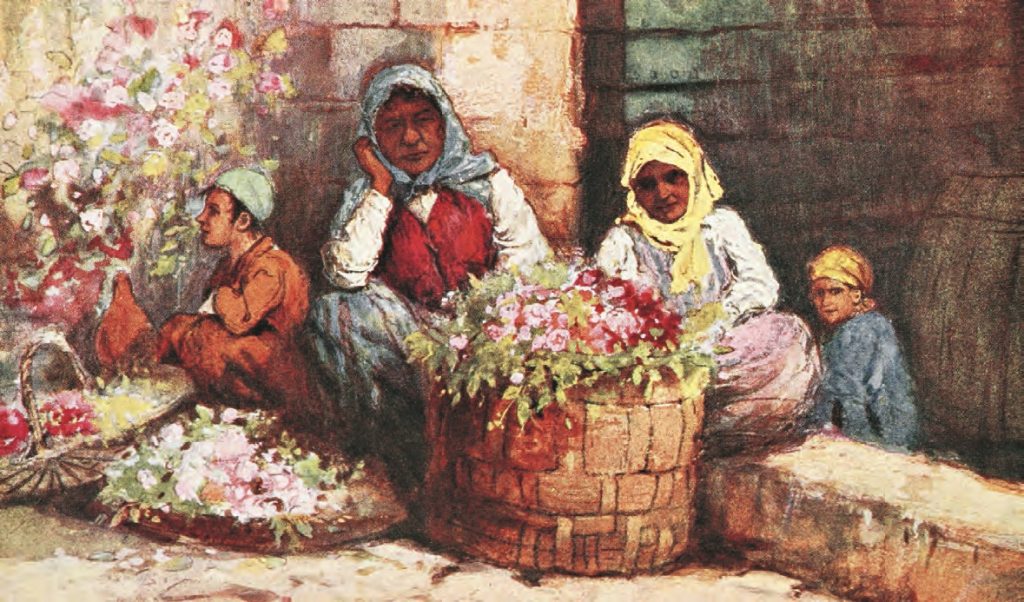
The Roma’s journey through Anatolia and the Ottoman territories is, contrary to common belief, not merely the story of a nomadic community. These communities, living in various regions of the state—particularly in the towns of Rumelia and Anatolia—demonstrated great skill in fundamental crafts such as blacksmithing, basket weaving, farriery, and animal husbandry, extending well beyond the realms of music and entertainment. We will examine, from a unifying and constructive perspective, how the Roma integrated into the Ottoman socioeconomic, legal, and military system in the light of historical sharia court registers (şer’iye sicilleri).
1. Historical Background: The Arrival and Settlement of the Roma in Anatolia
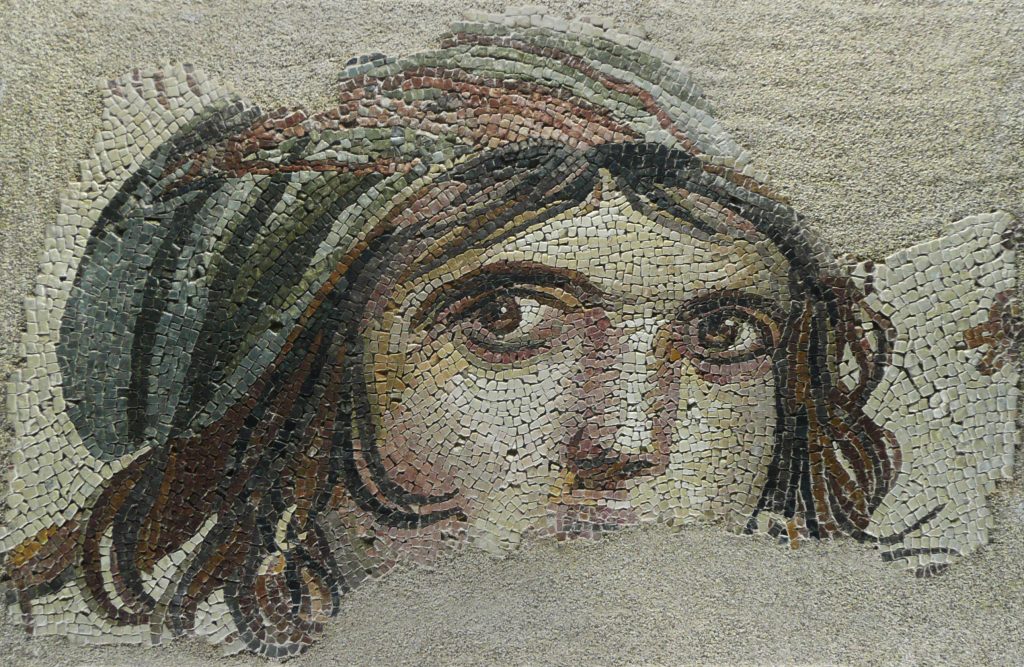
According to historical sources, the arrival of the Roma in the Anatolian geography dates back to the 11th and 12th centuries. Beginning to make their presence felt in these lands from the Byzantine period onward, the Roma spread across a vast geography via the Balkans (Rumelia) during the transition to Ottoman rule.
Their nomadic (konar-göçer) lifestyle turned them into a bridge connecting the remote corners of the empire and accelerating cultural interaction. Over time, however, they also transitioned to a settled way of life alongside nomadism; they established their own neighborhoods in Istanbul in areas such as Eğrikapı, Kasımpaşa, and Ayvansaray, and settled in Anatolian sanjaks like Hüdavendigar (Bursa) and Kocaeli, becoming an inseparable part of urban life.
2. The Roma within the Ottoman Administrative Structure and Class System
Without understanding the social structure of the Ottoman Empire, it is impossible to grasp the Roma’s position within it. As Prof. Dr. İlber Ortaylı emphasizes, the Ottoman State was in fact a “class” society, yet this classification was not based on nobility (prince, count, etc.) as it was in the West.
This classification in the Ottoman Empire was made on idealistic grounds and for the purpose of serving the state; Muslims, non-Muslims, and, later on, the Roma were incorporated into these groups with a unique status. Admission to the most important class of the state, the “military class” (askeri sınıf), was not hereditary; Muslim villagers, Christians, and Roma groups could also join this structure, which was established for purposes of control. This situation is one of the clearest indicators of the integrative state mindset of the Ottomans, shaped by merit and loyalty to the state.
3. The Sanjak of Rumelia and Roma Employment in the Military Organization
One of the greatest truths often overlooked in historiography is the enormous contribution the Roma made to the Ottoman military force. Starting from the 16th century, the Roma undertook extremely critical roles in the Ottoman army in “rear services” (in the status of müsellem).
Rumelia was the gateway of the Ottomans to Europe and one of their most important military centers. According to historical data shared by İlber Ortaylı, of the approximately 500,000-strong population in the Sanjak of Rumelia at that time, an enormous portion—200,000 people—was directly employed in the army. Roma who joined the military class, produced equipment for the army, served in fortresses, and provided logistical services (müsellem) were exempted from taxes or granted exemptions from certain taxes in return for these services. From the shoeing of horses (farriery), which were the backbone of the army, to the iron casting of essential equipment such as swords and shields, the heart of the army beat in the hands of artisan Roma masters.
4. Socioeconomic Life as Reflected in the Sharia Court Registers
The most reliable way to understand the Roma’s presence in Ottoman Anatolia and their integration with the legal system is to examine the sharia court registers (şer’iye sicilleri), the court records of the period. The court records prove that the Roma were not merely a marginalized group; they actively utilized mechanisms of trade, indebtedness, and legal security in daily life.
- The Surety (Kefalet) System: In the records of Beşiktaş Court Register No. 2, dated 1561, it is documented that a person named Emir b. Veli acted as guarantor (kefil) for the 2,200 akçe debt of the Gypsy Haşarı b. Gasuzham. This document demonstrates that the Roma developed economic relations based on mutual trust with other social groups and actively used the surety mechanism within the Ottoman legal system.
- Hawale (Bill of Exchange) and Financial Instruments: In another ruling of the same register, disputes are recorded concerning Ali b. Mahmud’s claim of 1,200 akçe from the Gypsy Osman b. Kasım, and the payment of the debt via “hawale” (bill of exchange/remittance) through the Gypsy Tokmak and the Greek (Rum) Anna. This situation indicates that the Roma possessed a broad economic network characterized by ethnic diversity.
- Karz-ı Hasen (Interest-Free Loan): Again in documents from the same period, it was recorded by the court that the Gypsy Durmuş b. Bazarlı received 360 akçe as “karz-ı hasen” (an interest-free loan) from the Gypsy Çakır b. Derviş. This proves that the social solidarity networks among themselves were placed on a legal footing.
All of these examples reveal the extent to which the Roma, engaged in artisanship and trade, were ordinary and legal actors within the economic wheels of the empire.
5. Taxation, Identity Struggle, and the Pursuit of Legal Rights
The Ottoman State regarded the Roma administratively as a separate “taife” (group/community) and developed special mechanisms for tax collection. The Roma society within the empire consisted of both Muslim and non-Muslim (Christian, etc.) individuals.
- Tax Distribution: A warrant (berat) contained in Istanbul Court Register No. 22 (Gregorian 1695-1697) regulates how the taxes of the Kıbtiyan taifesi (Coptic/Roma community) were to be collected. According to this document, it was ordered that 660 akçe be collected as a lump sum tax (maktu) from Muslim Roma, while 730 akçe be collected as jizya (poll tax) from non-Muslims.
- Equality Before the Law and the Right to Object: The Ottoman legal system granted individuals the right to object in the face of injustice. A magnificent example found in Istanbul Court Register No. 12 (Gregorian 1663-1664) is proof of this. The Muezzin el-Hâc Mehmed b. Bâli objected in court to the demand that he pay the jizya tax, which was levied on non-Muslims, solely because his father’s name was recorded in the “Gypsy register” (Çingene defteri). By proving that he was a follower of Ahl al-Sunnah (ehl-i sünnet), that he performed his prayers (namaz), and that he had gone on the Hajj (pilgrimage), Mehmed obtained an official document from the court confirming his exemption from this tax. This fatwa obtained magnificently demonstrates that, in Ottoman law, mere ethnic origin or a name in a register could not be a means of punishment or unjust taxation, and that legal status was based on merit and facts.
6. Bearers of Social Peace, Craftsmanship, and Art
Although occasional individual public order incidents occurred in the historical process (for example, banditry incidents in the 1732 Bab Court records) from time to time due to economic hardships or the difficulties brought by nomadic life, these were specific incidents that constituted a general Anatolian issue and cannot be attributed to the entire Roma community.
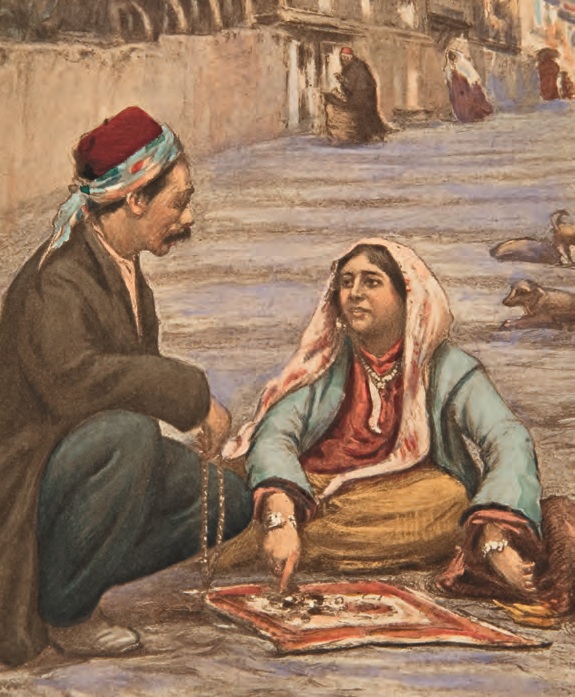
On the contrary, apart from the services they rendered to the Ottoman army as farriers, repairmen, and itinerant craftsmen, the Roma stood out for their arts, which were the true talents nourishing the soul of Anatolia. With the exuberant music they performed at circumcision festivities, palace weddings, and conquest ceremonies, they boosted public morale and, by bringing different segments of society together in the same rhythm, virtually became bearers of social peace and cohesion.
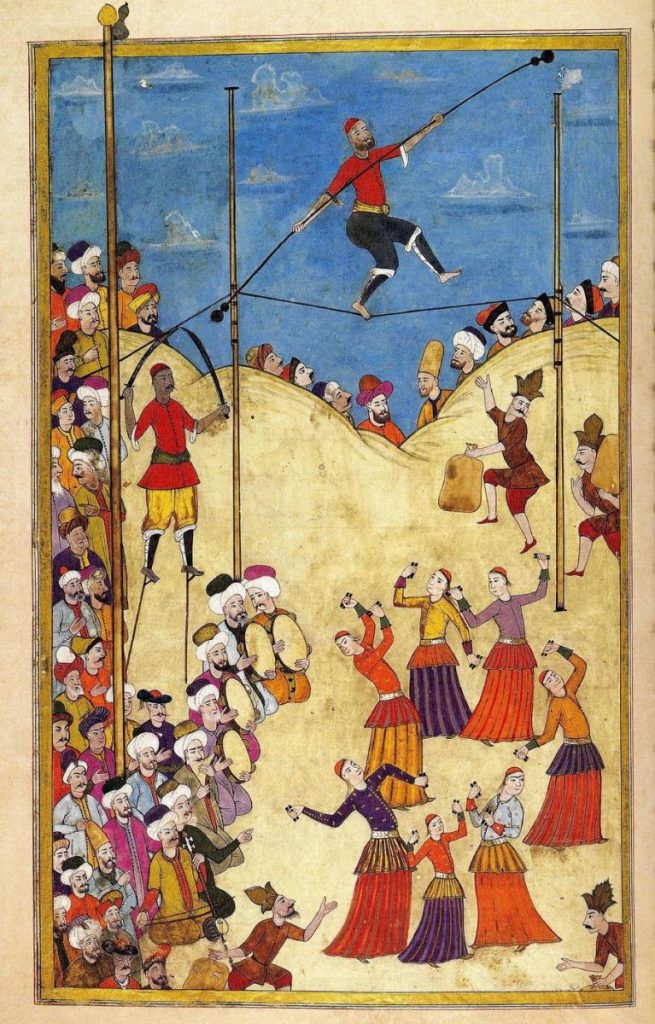
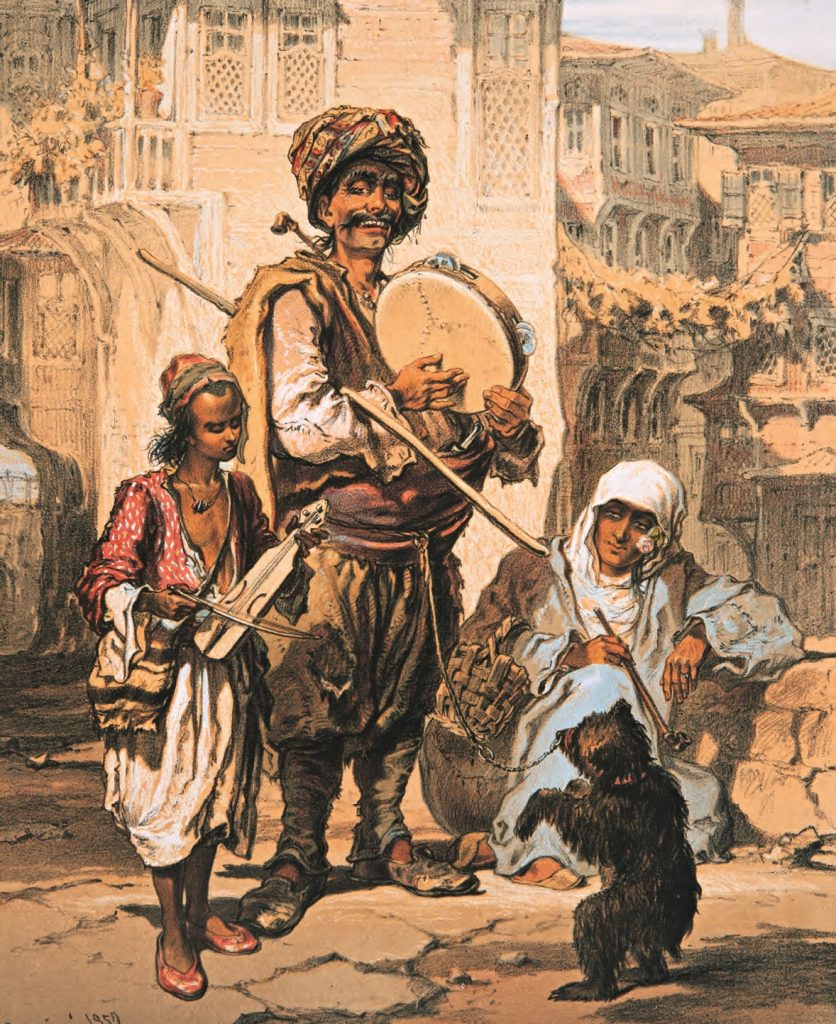
By the Republican era, urban Roma who had abandoned nomadism held a very prestigious place in professional musical life; they have continued to keep our culture alive as the most esteemed instrumentalists (saz ustaları) of Turkish classical music to this day. Even in the verses of the great Turkish poet Orhan Veli Kanık, this aesthetic admiration for them finds its place as follows:
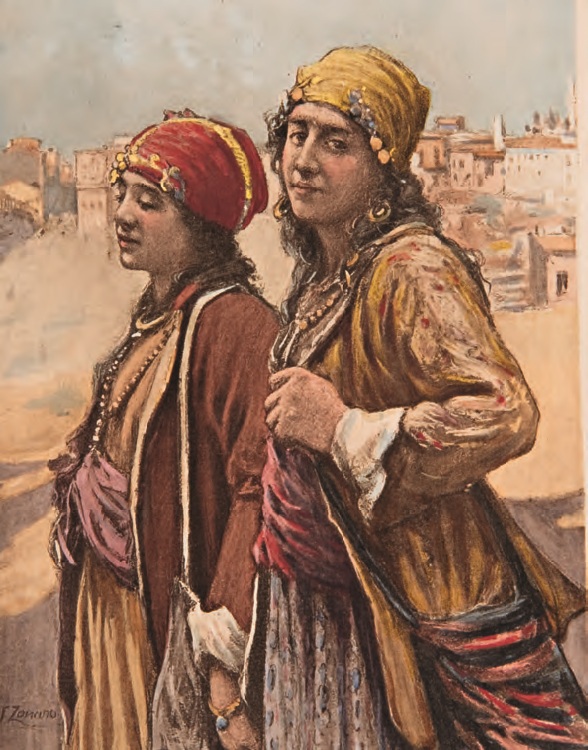
How beautifully their eyes gaze, Blacker than night, finer than light. Perhaps this is a dream, Or perhaps I am a Gypsy.
7. Conclusion
The Roma, who have bound their destiny to the lands of Anatolia and Rumelia like a shadow for a thousand years, participated in the idea of the “Eternal State” (devlet-i ebed müddet) with their own unique colors, despite exclusion and bureaucratic difficulties. With their loyalty to the state, military merit, and the iron they forged, as well as with their social joy and the unique arts they performed, they have been the silent, unostentatious, yet absolutely indispensable figures of Anatolian social tranquility. Historical documents and sharia court registers prove to us in the simplest terms that they were not merely marginal groups; on the contrary, they were profoundly integrated into Ottoman socioeconomic life, the justice mechanism, and the state army.
Bibliography and Further Reading Suggestions
- Acton, T. (1974). Gypsy Politics and Social Change: The Development of Ethnic Ideology and Pressure Politics among British Gypsies from Victorian Reformism to Romany Nationalism. London: Routledge & Kegan Paul.
- Agmon, I. (2004). Women’s History and Ottoman Shari’a Court Records: Shifting Perspectives in Social History. Hawwa, 2, pp. 172-209.
- Akkan, B., Gümüş, G., Karatay, A., & Erel, B. (2008). Romanlar ve Sosyal Politika [Roma and Social Policy]. İstanbul: N.P.
- Aksu, M. (1993). Türkiye’de Çingene Olmak [Being a Gypsy in Turkey]. İstanbul: Ozan Yayıncılık.
- Alpman, N. (1997). Başka Dünyanın İnsanları Çingeneler [Gypsies: People of Another World]. İstanbul: Ozan Yayıncılık.
- Altınöz, İ. (2013). Osmanlı Toplumunda Çingeneler [Gypsies in Ottoman Society]. Ankara: Türk Tarih Kurumu Yayınları.
- Braude, B. (1982). Foundation Myths of the Millet System. In B. Braude & B. Lewis (Eds.), Christians and Jews in the Ottoman Empire: The Functioning of a Plural Society (pp. 69-88). New York.
- Çelik, F. (2004). Exploring Marginality in the Ottoman Empire: Gypsies or People of Malice (Ehl-i Fesad) as Viewed by the Ottomans. European University Institute Working Papers, 39, pp. 1-21.
- Çelik, F. (2018). Osmanlı İmparatorluğu’nda Çingeneleri / Romanları Çalışmak ya da İğneyle Kuyu Kazmak [Studying Gypsies/Roma in the Ottoman Empire or Digging a Well with a Needle]. MSGSÜ Dergisi, 2(18), pp. 249-266.
- Dingeç, E. (2004). Rumeli’de Geri Hizmet Teşkilatı İçinde Çingeneler (XVI. Yüzyıl) [Gypsies within the Rear Service Organization in Rumelia (16th Century)] (Doctoral dissertation). Anadolu University, Institute of Social Sciences, Eskişehir.
- Gençoğlu, H. (2025). Osmanlı Anadolu’sunda Çingeneler [Gypsies in Ottoman Anatolia]. Independent Türkçe.
- Ginio, E. (2004). Neither Muslims nor Zimmis: The Gypsies (Roma) in the Ottoman Empire. Romani Studies, 5(14), pp. 117-144.
- Gökbilgin, M. T. (1945). Çingeneler [Gypsies], Vol. III. In İslam Ansiklopedisi [Encyclopedia of Islam]. İstanbul: Milli Eğitim Basımevi.
- Marsh, A. (2008). A Brief History of Gypsies in Turkey. ERIAC.
- Marushiakova, E., & Popov, V. (2001). Gypsies in the Ottoman Empire: A Contribution to the History of the Balkans. University of Hertfordshire Press.
- Ortaylı, İ. (2018). İlber Ortaylı Osmanlı’daki Romanları anlattı [İlber Ortaylı Explained the Roma in the Ottoman Empire]. CNN Türk.
- Osmanlı Şer’iye Sicilleri: Bab Mahkemesi 150, 3; Beşiktaş Mahkemesi 2; İstanbul Mahkemesi 12, 22 [Ottoman Sharia Court Registers: Bab Court 150, 3; Beşiktaş Court 2; Istanbul Court 12, 22].
- Özsoy, O. (2021). Osmanlı İmparatorluğu’nda Çingenelerin Sosyo-Ekonomik Yapıları [Socio-Economic Structures of Gypsies in the Ottoman Empire]. DergiPark.
- Paspati, A. (1870). Études Sur Les Tchinghianés ou Bohémiens de l’Empire Ottoman [Studies on the Tchinghianés or Bohemians of the Ottoman Empire]. İstanbul.
- Yılgür, E. (2015). Tek Parti Döneminde “Kıpti” Nüfusun İskanı ve Vatandaşlığa Kabulü Üzerine Genel Bir Değerlendirme [A General Evaluation on the Settlement and Naturalization of the “Kıpti” Population in the Single-Party Period]. MSGSÜ Sosyal Bilimler Dergisi, 12, pp. 32-45.
⚖️
License and Copyright Notice
Media usage rules
Check the license/copyright information for all media files (images, videos, audio, documents, etc.) included in this content from the relevant work descriptions.
📚 Read the Terms and Conditions