

Anatolia’s First Geological Observer: Strabo and Anatolia in His Work “Geography”
Explore how Strabo of Amaseia, Anatolia's first geological observer, documented tectonics, volcanism, and fluvial processes in his 17-volume "Geography" over 2,000 years ago.
An Invitation to Time Travel
With today’s technological capabilities, we can monitor the movement of continents via satellites and analyze the depths of the earth with seismic data. But what if, two thousand years ago, a person tried to understand the world—and especially Anatolia with its complex geological structure—using only limited tools, through observation, inquiry, and compilation? Strabo of Amaseia (64 BC – 24 AD) is precisely that geographer, historian, and philosopher who embarked on this intellectual adventure and whom we may regard as Anatolia’s first systematic geological observer.
His monumental 17-volume work “Geographica” (Geography) is not merely a list of cities and rivers, but a living, breathing portrait of the ancient world. In this portrait, the geography of Anatolia is depicted in the finest detail. Strabo addresses a series of natural phenomena and processes—from mountain formation to volcanic eruptions, from earthquakes to the erosive power of rivers, from mineral deposits to thermal springs—by casting off the shadow of mythological narratives and adopting a rational, observation-based approach. In this article, we will take a closer look at the geological observations concerning Anatolia in his “Geography,” based on Strabo’s life and methodology. We will analyze how he described phenomena that today we study under the headings of “geomorphology,” “tectonics,” “volcanology,” and “hydrogeology,” which accurate determinations he made, and how he inevitably interpreted them within the limits of his era’s knowledge. Understanding Strabo is not just reading an ancient text, but also entering through one of the first and most important doors that open onto Anatolia’s geological memory.
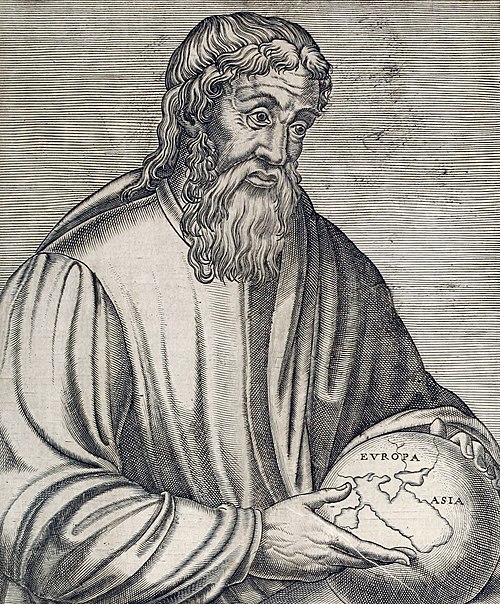
1. Section: Who Is Strabo? Understanding the Geographer
To grasp the depth of Strabo’s geological observations, one must first understand who he was, his intellectual background, and the purpose for which he wrote his work.
1.1. From a Native of the Black Sea to a Roman Citizen: A Lifetime of Travel
Strabo was born into a wealthy and influential family in Amaseia (modern-day Amasya), in the Pontus region on the Black Sea coast of Anatolia. This geographical origin was one of the factors that determined his destiny. Amaseia was also the capital of the Kingdom of Pontus, and the young Strabo grew up in an environment where Hellenistic culture and the native traditions of Anatolia were blended.
He received a systematic education; he studied language, literature, philosophy, and rhetoric. Among his most important teachers were the grammarian Aristodemus and the prominent philosopher Tyrannion. However, the person who most shaped his intellectual world was Xenarchus of Amisus (Samsun), a follower of the Aristotelian tradition. Aristotle’s scientific methodology based on observation and classification would form the foundation of all of Strabo’s work.
Strabo was a “traveler-scholar” (he cannot be called an armchair traveler, for he traveled extensively, yet his readings were at least as important as his journeys). From his own statements, we know that he traversed a vast geography, from Italy and Sicily in the West to the borders of Armenia in the East, and from the Black Sea coast in the North to Egypt and Ethiopia in the South. Especially in Egypt, he had access to the enormous resources of the Library of Alexandria, observed the Nile River, and these experiences enriched his ideas on hydrogeology and delta formation.
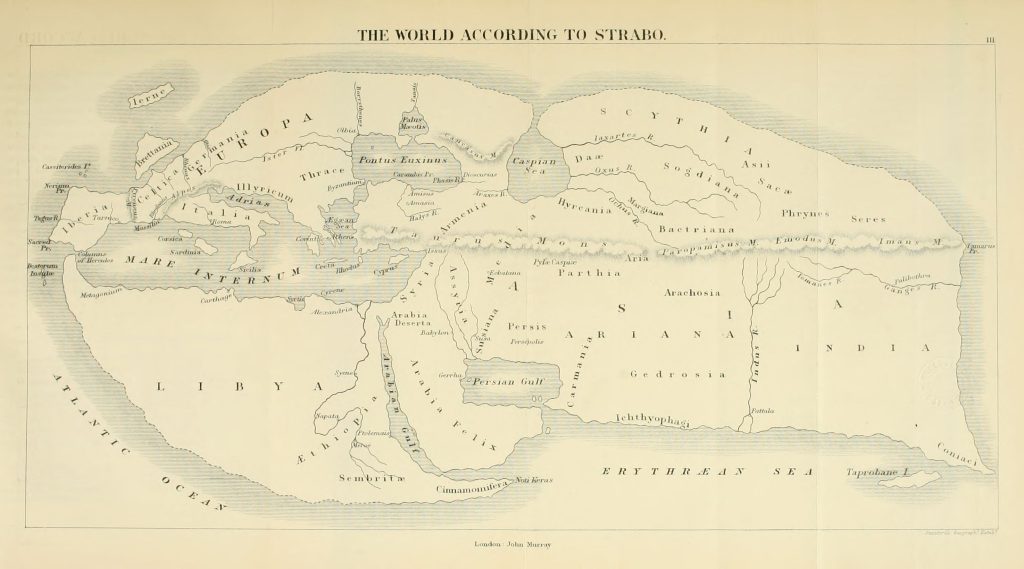
1.2. “Geography” (Geographica): Why and How?
Strabo did not write the “Geography” merely out of academic curiosity. He considered geography a practical science. He aimed to provide a comprehensive guide for the ruling class of the newly expanded Roman Empire about the lands and peoples they governed. For this reason, the work contains not only physical geography but also information on ethnography, history, politics, and economy.
His methodology rested on two pillars:
- Autopsia (Personal Observation): Providing first-hand descriptions of the places he saw and examined.
- Historia (Research/Literature Review): Critically sifting through previously written works and using them. He quoted from hundreds of authors, from Homer to Eratosthenes, from Herodotus to Artemidorus, and discussed their accuracies and inaccuracies.
Strabo regarded geography as a branch of philosophy. For him, a geographer should answer not only the question “where?” but also “why there?” and “how does this affect people?”. This holistic approach also shaped his geological observations.
2. Section: The Geological Face of Anatolia Through Strabo’s Eyes
Strabo’s “Geography” is the most important witness of the geological dynamism of Anatolia in antiquity. It is possible to examine his observations under the headings of modern geology.
2.1. Mountain Formation (Orogeny) and Tectonics
Strabo describes the mountainous structure of Anatolia with remarkable accuracy. According to him, Anatolia appears as a plateau, surrounded by mountain ranges. He delineates, in broad outline, the Pontic Mountains to the north (such as the Scydises (Kaçkar) and Moschicus (Canik) Mountains in the Eastern Black Sea) and the Taurus Mountains to the south. He notes that the Taurus range extends from Lycia (southwestern Anatolia) to Cilicia (southern Anatolia) and even into Syria, as if encircling the Anatolian plateau like a wall from the south.
Strabo’s ideas about mountain formation reflect the most advanced views of his time. Influenced by Aristotle, he thought that mountains were formed by the contraction and fracturing of the earth’s crust. However, his real merit lies in combining this theoretical knowledge with concrete observations. For instance, he sensed the role of earthquakes in mountain formation. He records that Anatolia, especially the western coasts of Asia Minor (Ionia, Caria, Lydia), was frequently shaken by earthquakes and that these earthquakes altered the shape of the earth. Today we know that Strabo was describing this highly active tectonic region, which is the western extension of the Alpine-Himalayan belt formed by the collision of the African and Eurasian plates.
2.2. Volcanism and Hot Springs
Perhaps Strabo’s most striking contribution to geology is his observations on volcanic events. He describes in detail the region on the border of Lydia and Phrygia (modern-day Kula, Manisa), which he called Katakekaumene (the Burnt Land). He depicts the black, barren, lava-covered terrain here as if it had emerged from a fire. He notes the volcanic cones and that the stones in this region were as heavy as iron and black. Kula is one of the world’s youngest volcanic areas, and Strabo’s descriptions are the first source to document this geological heritage most clearly.
However, his masterpiece in the field of volcanology is the Cappadocia region. He uses the expression “a high mountain whose summit is always covered with snow and has crater-like depressions” for Mount Argaeus (Mount Erciyes). Besides Erciyes, he also identifies what is today Mount Hasan as a volcanic mountain. It was, of course, impossible for him to know that the soft tuff layer formed by the cooling of lava and ash erupted by these two giant volcanoes was eroded by wind and water to form fairy chimneys. Yet he conveys with extreme accuracy that the region had a volcanic character, that this volcanic material could be easily carved, and that people therefore built underground cities and dwellings there. Strabo is the first scientist to establish the relationship between Cappadocia’s geological and human geography.
Directly linked to volcanism, hot springs (spas) and geysers attracted his attention. He mentions spas throughout Anatolia; Hierapolis (Pamukkale) is the most famous of them. He describes the travertine formations at Pamukkale by saying that “the surfaces over which the waters flow are covered with a white layer of stone.” He notes that the waters were healing and were used by both the local population and the Romans. He puts forward the idea that these thermal springs heat the water from underground “combustible materials” (likely magma), which is perhaps the most accurate guess regarding the basic principle of geothermal energy in antiquity.
2.3. The Power of Rivers: Erosion, Deposition, and Delta Formation
Strabo is a significant observer who grasped the power of rivers in shaping the earth’s surface. He noticed that as the rivers of Anatolia descended from the mountains, they carved deep valleys and carried alluvium to the sea. His most remarkable observation is about the Maeander (Büyük Menderes) River. He writes that this river continuously flows winding and twisting (the term “meandering” originates from here) and that it advances the coastline by filling the sea with the alluvium it carries. He goes so far as to identify that some land masses that were once islands became connected to the mainland by the alluvium brought by the river. This is an extremely advanced observation of the geomorphological impact of a river.
Similarly, he records that the Caicus (Bakırçay), Hermus (Gediz), and Caÿster (Küçük Menderes) rivers created plains and filled up harbors. He particularly recounts how the harbor of Ephesus became silted up due to the alluvium brought by the Caÿster River and eventually fell into disuse. This is invaluable information for historical geography and geoarchaeology.
2.4. Mines and Underground Resources
Strabo also details Anatolia’s rich underground resources in his work. True to his belief in the practical utility of geography, he emphasizes the economic potential of regions.
- Gold: He mentions the legendary gold-bearing sands of the Pactolus (Sart Stream) River in Lydia. He also refers to gold mines in the Pontus region (Eastern Black Sea).
- Silver and Lead: He describes silver mines in the regions of Atarneus (near Dikili) and Andeira (near the Gulf of Edremit).
- Iron and Quarries: He mentions various stone and mineral deposits, such as iron in Cappadocia and marble quarries in Mysia (around Balıkesir, Bursa).
- Salt: He speaks of Lake Tatta (Salt Lake) and salt pans along the coastline.
These records provide important clues not only about the ancient mining economy but also about the geological diversity of Anatolia. He seems to have sensed that specific minerals are associated with specific rock types and geological formations.
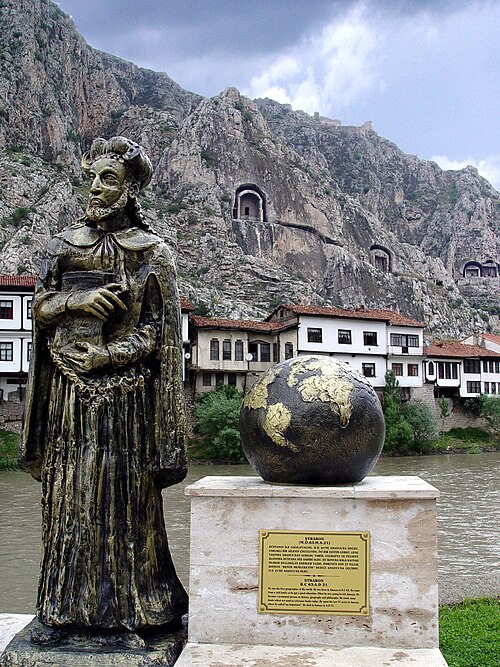
3. Section: A Bridge Between Mythology and Reason: Strabo’s Interpretations
When reading Strabo’s work, we constantly feel him moving between two worlds: on the one hand, the mythological, legendary world of Homer, and on the other, the rational, observational world of Aristotle. Strabo greatly admired Homer and considered him the first founder of geography. However, with the rigor of a scientist, he critically evaluates mythological narratives.
For example, he relays the mythological stories concerning the formation of the Dardanelles (Hellespont) (such as the Golden Fleece mythology), but implies that these are “poetic depictions.” As for the actual formation mechanism, he focuses on the water exchange between the Black Sea (Pontus Euxinus) and the Sea of Marmara (Propontis) as well as the topographical structure of the strait.
Similarly, he treats earthquakes not merely as the wrath of Poseidon but as a natural phenomenon. He tries to explain volcanic eruptions by the ignition of underground winds and combustible materials (such as sulfur and coal). This explanation is primitive when compared to modern theories of plate tectonics and magmatism, but what matters is his effort to seek natural cause-and-effect relationships rather than supernatural explanations. In this respect, Strabo is the most important representative of the Anatolian rationality (logos), which has persisted since Thales, in the fields of geography and geology.
4. Section: Strabo’s Legacy and Its Evaluation in the Light of Modern Geology
When we evaluate Strabo’s geological observations in the light of modern science, we see both admirable accuracies and inevitable errors.
Accurate Determinations:
- Active Tectonic Region: He correctly determined that Anatolia, especially its western part, is in an earthquake zone and that these earthquakes shape the earth’s surface.
- Volcanic Extension: He accurately described the character of Cappadocia, Kula, and other volcanic regions.
- Fluvial Processes: He perfectly observed the power of rivers to erode, transport, and deposit, particularly the delta formation process of the Meander rivers.
- Geothermal Systems: He put forward the idea that thermal springs are connected to underground heat sources.
- Geological Control: He demonstrated how human settlements (underground cities, mines) are controlled by geological structure.
Limitations and Misconceptions:
- Time Scale: Strabo could not comprehend the vast scale of geological time (millions of years). He interpreted events within human lifetimes or mythological timelines.
- Internal Mechanisms: He was unaware of plate tectonics theory, the fundamental cause underlying mountain building, volcanism, and earthquakes. His explanations remained superficial and regional.
- Fossil Interpretation: Unlike some ancient writers who correctly interpreted fossils as “petrified creatures,” Strabo hardly mentions fossils or tends to associate them with mythological creatures.
Nevertheless, Strabo’s legacy is immense. He is the first great “natural scientist” to document the geological identity of Anatolia. His work served as a fundamental reference both for the Roman period and afterwards, and was used by Byzantine and Islamic geographers. Today, geologists, historians, and archaeologists still consult Strabo’s pages to understand the paleogeography and geoarchaeology of Anatolia.
Conclusion: The Ancient Voice of the Anatolian Countryside
When Strabo looked out from the slopes of Amaseia and observed Anatolia’s majestic mountains, flowing rivers, and burnt lands, he was not merely working as a geographer. He was a philosopher trying to decipher the language of nature, a patriot mapping the topography of his empire, and a historian recording what he saw for future generations.
His work “Geography” is the first and most comprehensive travelogue written about the geological heritage of Anatolia. Without a hammer, microscope, or satellite image in hand, and armed only with keen eyes, a critical mind, and endless curiosity, Strabo wrote the first draft of the geological story of these ancient lands. His observations remind us that science does not begin with the most sophisticated instruments; it begins with looking carefully at nature, asking the right questions, and interpreting the available data rationally.
Anatolia has been shaken by countless earthquakes, rivers have deposited new lands, and volcanoes have fallen silent since Strabo’s time. But the fundamental geological framework he described has not changed. Reading Strabo is to witness the journey of these dynamic lands through deep time and to take a stroll through the mind of Anatolia’s first geological observer.
🎮Learn by Playing
STRABO: IN PURSUIT OF THE LOST VOLUMES
Unravel the secrets of the ancient world, complete the 17-volume Geographica.
PLAY ➜
Bibliography and Further Reading Suggestions
For those who wish to conduct a more in-depth study of Strabo’s work and his geological observations, the following sources will serve as a guide:
Primary Sources (Translations)
- Strabo.Geographika: Antik Anadolu Coğrafyası [Geographica: Ancient Geography of Anatolia]. (Trans. Adnan Pekman). Arkeoloji ve Sanat Yayınları.
- (Note: A meticulous translation. It includes the books on Anatolia (Books 12-14) in Turkish. It is the most ideal source for beginners).
- Strabo.The Geography of Strabo. Loeb Classical Library, Harvard University Press.
- (Note: The standard 8-volume academic edition that includes the original Greek text alongside its English translation).
Secondary Sources (Analysis and Commentaries)
- Dueck, Daniela.Strabo of Amasia: A Greek Man of Letters in Augustan Rome. Routledge.
- (Note: An excellent study on Strabo’s life, intellectual context, and literary methodology).
- Roller, Duane W.A Historical and Topographical Guide to the Geography of Strabo. Cambridge University Press.
- (Note: A comprehensive guide presenting Strabo’s geography with modern maps and explanations. Extremely valuable for understanding the context of his geological observations).
- Kaya, M. Ali (Ed.).Antik Çağ’da Anadolu [Anatolia in Antiquity]. Bilgin Kültür Sanat Yayınları.
- (Note: This work, featuring articles on the ancient geography and history of Anatolia, contains sections referencing Strabo).
- Dueck, Daniela et al. (Eds.).Strabo’s Cultural Geography: The Making of a Kolossourgia. Cambridge University Press.
- (Note: An academic compilation addressing various aspects of Strabo’s understanding of cultural geography).
On Geology and Historical Geography
- Eastwood, Warren J. et al. (Eds.).Quaternary Environmental Change in the Eastern Mediterranean.
- (Note: Academic books of this kind, which address the changes in the region during the latest geological period, help us understand how the landscape described by Strabo was formed).
- Turkish Archaeology and Cultural Heritage Journals: Articles on the geoarchaeology of ancient cities mentioned by Strabo are published in journals such as Arkeoloji ve Sanat [Archaeology and Art], Actual Archaeology, and TÜBA-AR.
Internet Sources
- Perseus Digital Library: Provides free access to the English translation and Greek text of Strabo’s Geographica. (www.perseus.tufts.edu)
- JSTOR, Academia.edu: Searches with keywords like “Strabo geology”, “Ancient geography”, and “Katakekaumene” provide access to current academic articles on the subject.
⚖️
License and Copyright Notice
Media usage rules
Check the license/copyright information for all media files (images, videos, audio, documents, etc.) included in this content from the relevant work descriptions.
📚 Read the Terms and Conditions