

Rebuilding a Nation: “The Foundation of the Turkish Republic is Culture”
Explore how Atatürk’s dictum “the foundation of the Turkish Republic is culture” drove the nation’s transformation through language, history, art, education, and science. An in-depth analysis of Turkey’s cultural revolution.
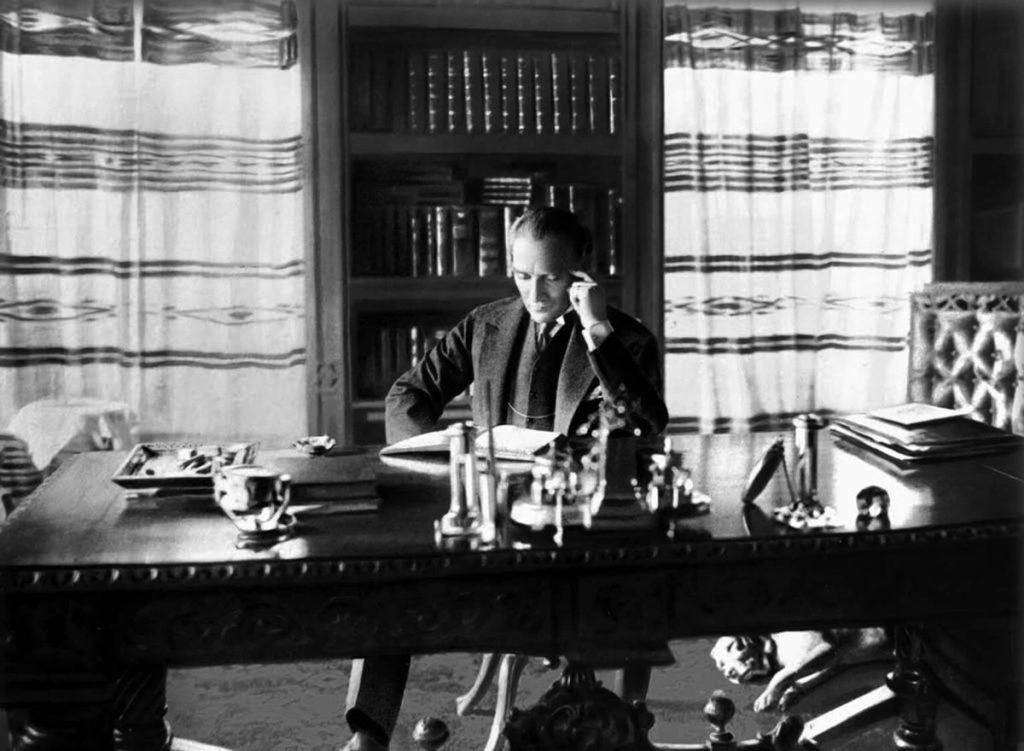
The statement Mustafa Kemal Atatürk dictated to Afet İnan in 1936, “The foundation of the Turkish Republic is culture. Let me explain this statement: Culture is reading, understanding, seeing, deriving meaning from what you see, being alert, thinking, and training the intellect,” is the clearest proof that the young Republic was not merely a political regime change but a wholesale civilizational project. Why did the nation-state that rose from the ashes of an empire place “culture”—not the economy, not the army, not politics—at its foundation? This article examines in depth Atatürk’s vision of culture, the cultural codes of the Republican revolutions, and the vital role of this vision in the construction of modern Turkey.
1. Introduction: From the Battlefields to the World of the Mind
The War of Independence was a military victory; but for Atatürk, the real war was the cultural war to be waged against ignorance, dogmatism and backwardness. The fact that he convened the “Maarif Congress” (Education Congress) during the fiercest days of the Battle of the Sakarya, in an atmosphere where the sound of cannon fire could be heard from Ankara, is enough to show where culture and education stood in his order of priorities.
Atatürk did not attribute the collapse of the Ottoman Empire solely to military or economic reasons. For him, the real collapse began in mentality. The break with scientific thought, the estrangement from art, and the identity crisis had turned the empire into the “Sick Man of Europe.” The prescription was clear: to build a cultural state with a solid foundation, its mortar mixed with science and art.
2. Conceptual Framework: Atatürk’s Definition of “Culture”
While the intellectual world of the period debated Ziya Gökalp’s distinction between “Hars” (National Culture) and “Medeniyet” (Universal Technique/Science), Atatürk displayed a more pragmatic and integrative approach. For him, culture was the sum of the emotional bonds that form a nation’s character and the mental faculties that will carry that nation forward.
Atatürk built culture upon the following tripod:
- National Identity (History and Language): Knowing one’s own roots.
- Positive Science (Science and Technique): Perceiving the world through scientific methods.
- Fine Arts (Aesthetics): Developing human sensibility and creativity.
In this context, the statement “the foundation of the Republic is culture” signifies that the state was built upon a society composed of individuals free in mind, free in conscience, and free in knowledge.
3. Language and History: Identity Building
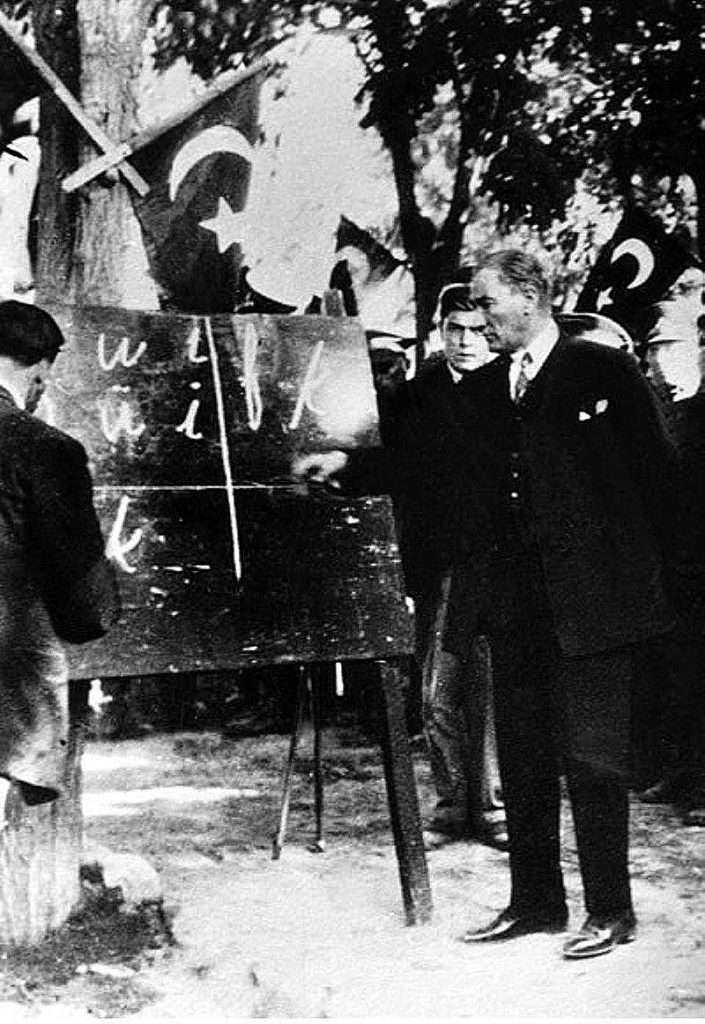
A nation’s culture lives through its language and breathes through its history. Before the Republic, the chasm between the Turkish spoken by the people and the Ottoman Turkish used by the state and the intellectuals had created a cultural rupture. The 1928 Alphabet Reform and the establishment of the Turkish Language Association in 1932 were not merely a change of script, but a move to “liberate thought.” The simplification of language meant the democratization of knowledge. Now, Mehmet Efendi the villager and the urban intellectual could communicate in the same language, nourishing the same cultural pool.
Similarly, through the work of the Turkish Historical Society, historical consciousness was lifted out of dynastic historiography and placed in a broad perspective stretching from Central Asia to the ancient civilizations of Anatolia (the Sumerians, the Hittites). This gave the Turkish people the message, “You are not a nomadic tribe; you are a civilization-founding nation,” instilling the self-confidence urgently needed by the people of a collapsed empire.
4. Art: The Mirror of Civilization
Atatürk’s statement that “A nation deprived of art has had one of its life veins severed” emphasizes that the aesthetic dimension of culture is not a luxury but a vital necessity. The Republic supported music, painting, sculpture and theatre as a matter of state policy.
- Music Revolution: The processing of traditional Turkish music motifs with Western polyphonic techniques (the example of the Turkish Five) was the most concrete cultural product of the East–West synthesis.
- Sculpture and Painting: Breaking the centuries-old prohibition on depiction developed Turkish society’s visual perception and capacity for abstract thought.
Art, for the Republic, was not a “showcase of modernization,” but a means to enhance human quality.
5. Education and Institutions: Disseminating Culture to the Grassroots
If culture remains the monopoly of an elite stratum, that structure is doomed to collapse. The greatest success of the Republic was the project to spread culture throughout Anatolia.
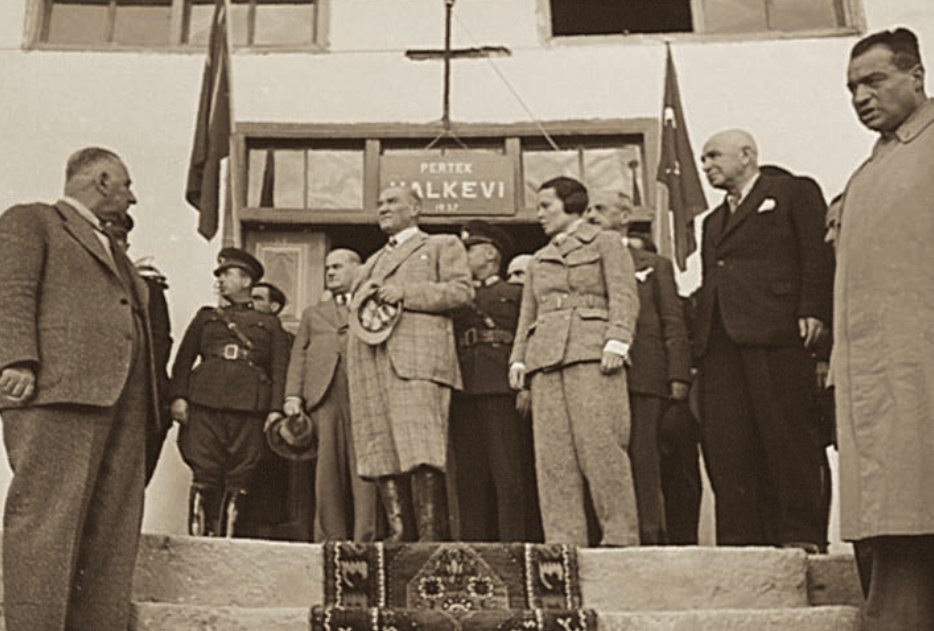
- People’s Houses (1932): With branches for theatre, library, sports, and social assistance, the People’s Houses functioned as “culture factories.” Thanks to these Houses, citizens in the remotest corners of Anatolia encountered theatre for the first time and set foot in a library.
- Village Institutes: Established under the architecture of Hasan Âli Yücel and İsmail Hakkı Tonguç, these institutes aimed to cultivate not merely literate individuals, but “enlightened producers” who listened to Mozart, read world classics, and employed modern techniques in agriculture. This was the planting of culture into the soil through the principle of “education within work.”
6. Positive Science: The Backbone of Culture
By declaring that “In life, the truest guide is science,” Atatürk proclaimed that the foundation of culture is not superstition but scientific truth. The 1933 University Reform, the transformation of the Darülfünun into a modern university, and the invitation extended to scientists fleeing Nazi Germany to come to Turkey demonstrate the young Republic’s desire to integrate its cultural codes with universal science. According to Atatürk, a society that had not acquired the ability for scientific thought could not possibly be characterized as “cultured.”
7. Conclusion: A Legacy Entrusted to the Future
“The foundation of the Turkish Republic is culture” is not a frozen statement but a dynamic goal. The modern legal system, women’s rights, universities, art institutions and scientific infrastructure that Turkey possesses today are the bricks laid upon this cultural foundation.
However, a foundation requires constant maintenance. Cultural degeneration, the corruption of language, the weakening of historical consciousness and the drift away from scientific thought all cause cracks in the foundation of the state. According to Atatürk’s vision, Turkey’s “rise above the level of contemporary civilizations” will only be possible by preserving its cultural depth and nourishing it with universal values. The Republic is a cultural revolution, and this revolution continues to be realized anew in the mind of every generation.
BIBLIOGRAPHY AND FURTHER READING SUGGESTIONS
The following fundamental works and sources have been utilized in the preparation of this article and for a deeper examination of the subject:
- İnan, Afet. Atatürk Hakkında Hatıralar ve Belgeler [Memories and Documents About Atatürk]. Türkiye İş Bankası Kültür Yayınları [Türkiye İş Bankası Cultural Publications].
- Atatürk, Mustafa Kemal. Nutuk [The Great Speech]. Kaynak Yayınları.
- Gökalp, Ziya. Türkçülüğün Esasları [The Principles of Turkism]. Ötüken Neşriyat.
- Atay, Falih Rıfkı. Çankaya [Çankaya]. Pozitif Yayınları.
- Turan, Şerafettin. Türk Kültür Tarihi [History of Turkish Culture]. Bilgi Yayınevi.
- Yücel, Hasan Âli. Davam [My Cause]. Türkiye İş Bankası Kültür Yayınları [Türkiye İş Bankası Cultural Publications].
- Kongar, Emre. Devrim Tarihi ve Toplumbilim Açısından Atatürk [Atatürk from the Perspective of the History of Revolution and Sociology]. Remzi Kitabevi.
- Lewis, Bernard. Modern Türkiye’nin Doğuşu [The Emergence of Modern Turkey]. Arkadaş Yayınları.
⚖️
License and Copyright Notice
Media usage rules
Check the license/copyright information for all media files (images, videos, audio, documents, etc.) included in this content from the relevant work descriptions.
📚 Read the Terms and Conditions