

Goethe’s Spiritual Journey East: Hafez, Islam, and the West-Eastern Divan
Explore how Goethe fled Napoleonic Europe through a mental Hegira to the East, found a twin in Persian poet Hafez, celebrated the Prophet Muhammad in verse, and created the timeless West-Eastern Divan as a bridge between cultures.
Introduction: Seeking Refuge in the East While Europe Burned
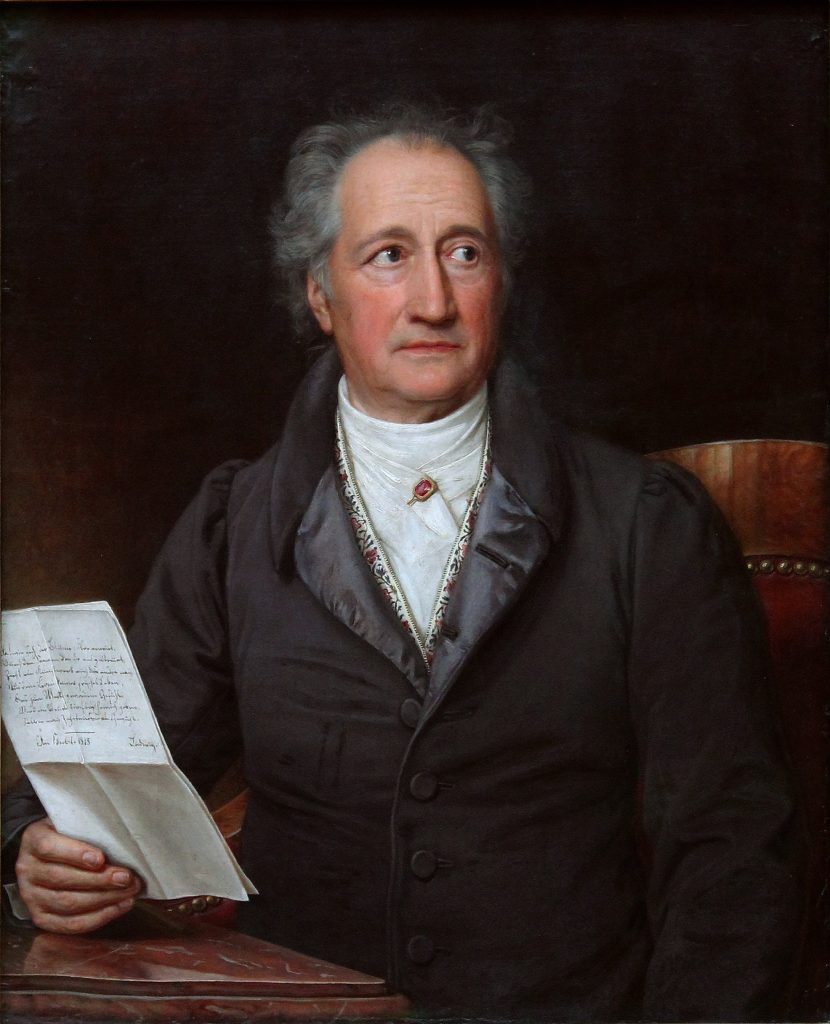
- The early 19th century… Europe was reeling from the chaos of the Napoleonic Wars (1803–1815); empires were collapsing and borders were shifting by the day. In the midst of this political and social turmoil, Johann Wolfgang von Goethe (1749–1832), considered the pinnacle of German literature, was seeking an escape to heal his soul.
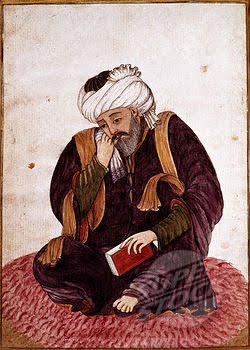
Goethe found this escape not in a physical relocation, but in a mental journey. In his words, it was a “Hegire” (Hijra). His destination was Shiraz, the city of wisdom in the East, and his companion was the Persian poet Hafez of Shiraz, who had lived centuries earlier.
1. Finding a Kindred Spirit: Goethe and Hafez
Goethe’s great encounter with the East truly began in 1814 when he read the Divan of Hafez, translated into German by the Austrian orientalist Joseph von Hammer-Purgstall. The 65-year-old Goethe saw a reflection of his own soul in Hafez’s verses.
Hafez was a “rind” – one who could offer both worldly pleasures and divine love in the same cup, and who stood against dogmas. Despite the gap of time and space between them, Goethe felt such a profound bond with him that he used a phrase that has since become well-known: “My twin” (Zwilling).
Goethe would later address Hafez as follows:
“O Hafez, how could I ever dare compare myself to you! We can only be twins. In your joy and in your sorrow, I find my own joy and sorrow.” 1
2. Goethe and Islam: “Mahomets Gesang” and Submission
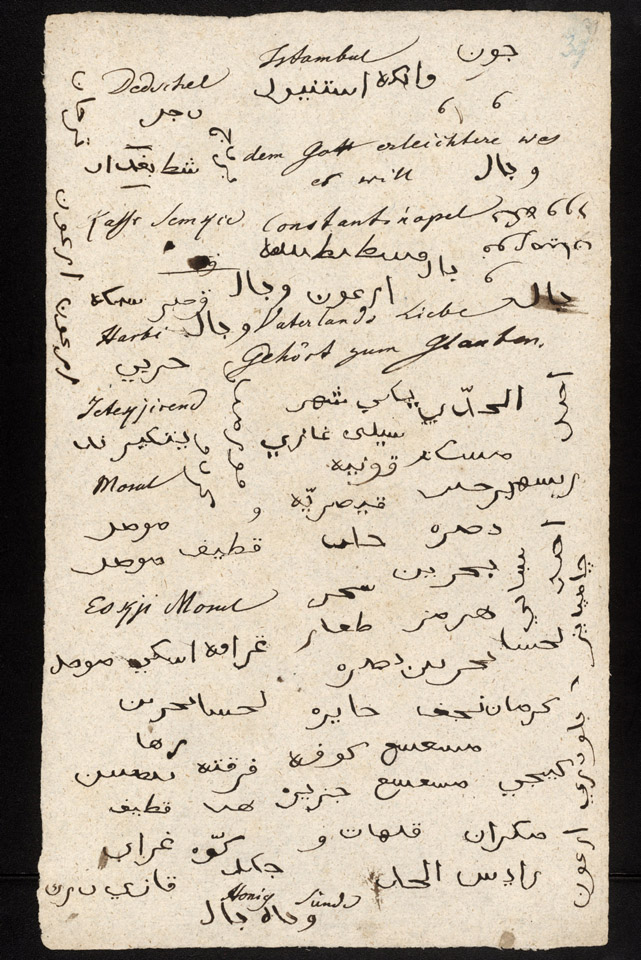
Goethe’s interest in the East was not limited to Hafez. Even in his youth, he had studied the Holy Qur’an, attempted to learn Arabic script (samples in his own handwriting are preserved in the Weimar Archives), and held deep respect for the Prophet Muhammad.
The Hymn of Muhammad (Mahomets Gesang)
In 1773, when he was just 24, Goethe wrote the poem “Mahomets Gesang” (The Hymn of Muhammad). In this poem, he likened the Prophet Muhammad to a mighty river that springs from the rocks, embraces its brothers (the other rivers) and grows, eventually leading them to the Ocean (the Creator). 1
MAHOMET’S SONG
SEE the rock-born stream!
Like the gleam
Of a star so bright
Kindly spirits
High above the clouds
Nourished him while youthful
In the copse between the cliffs.
Young and fresh.
From the clouds he danceth
Down upon the marble rocks;
Then tow’rd heaven
Leaps exulting.
Through the mountain-passes
Chaseth he the colour’d pebbles,
And, advancing like a chief,
Tears his brother streamlets with him
In his course.
In the valley down below
‘Neath his footsteps spring the flowers,
And the meadow
In his breath finds life.
Yet no shady vale can stay him,
Nor can flowers,
Round his knees all-softly twining
With their loving eyes detain him;
To the plain his course he taketh,
Serpent-winding,
Social streamlets
Join his waters. And now moves he
O’er the plain in silv’ry glory,
And the plain in him exults,
And the rivers from the plain,
And the streamlets from the mountain,
Shout with joy, exclaiming: “Brother,
Brother, take thy brethren with thee,
With thee to thine aged father,
To the everlasting ocean,
Who, with arms outstretching far,
Waiteth for us;
Ah, in vain those arms lie open
To embrace his yearning children;
For the thirsty sand consumes us
In the desert waste; the sunbeams
Drink our life-blood; hills around us
Into lakes would dam us! Brother,
Take thy brethren of the plain,
Take thy brethren of the mountain
With thee, to thy father’s arms!
Let all come, then!—
And now swells he
Lordlier still; yea, e’en a people
Bears his regal flood on high!
And in triumph onward rolling,
Names to countries gives he,—cities
Spring to light beneath his foot.
Ever, ever, on he rushes,
Leaves the towers’ flame-tipp’d summits,
Marble palaces, the offspring
Of his fullness, far behind.
Cedar-houses bears the Atlas
On his giant shoulders; flutt’ring
In the breeze far, far above him
Thousand flags are gaily floating,
Bearing witness to his might.
And so beareth he his brethren,
All his treasures, all his children,
Wildly shouting, to the bosom
Of his long-expectant sire.
Johann Wolfgang von Goethe, “Mahomet’s Song”. Translated by Edgar Alfred Bowring (1874).
The Origin of the Saying “We All Live in Islam”
Goethe was deeply impressed by the meaning of “submission” inherent in the word Islam. To his close friend Eckermann and in his letters, he used the following famous expression:
“Närrisch, dass jeder in seinem Falle / Seine besondere Meinung preist! / Wenn Islam Gott ergeben heißt, / Im Islam leben und sterben wir alle.”
English: “How foolish that everyone in his own case / Praises his own particular opinion! / If Islam means submission to God, / In Islam we all live and die.” 2
These statements are the greatest proof that Goethe saw Islam not as “the other,” but as a powerful manifestation of universal truth.
3. The Great Synthesis: The West-Eastern Divan (West-östlicher Divan)
As a result of these intense engagements, Goethe published his masterpiece, the “West-östlicher Divan” (West-Eastern Divan), in 1819.
The book was not merely a poetry collection; it was a manifesto of the Western mind meeting the Eastern heart. Goethe summarized the work’s central idea in these immortal lines:
“He who knows himself and others will also realize this: East and West can no longer be separated.” (Orient und Okzident sind nicht mehr zu trennen). 3
West-östlicher Divan (1819)
Original First Edition
Original First Edition
Conclusion:
In that famous poem, Goethe had likened the Prophet Muhammad to “a mighty river that embraces its brothers and rushes towards the Ocean (Allah).” In truth, Goethe’s own spiritual journey was no different. He was a courageous river that, in the darkness of the 19th century, did not hesitate to find the light of truth in the East.
Today, what falls to us is to stand on the bank of that river and remember this truth: Although the sun rises every day in the East, its light illuminates the whole world.
References
The information in this article is based on the following academic and primary sources:
- Goethe, J. W. von. (1819). West-östlicher Divan. Stuttgart: Cotta. ↩︎
- Goethe, J. W. von. (1773). “Mahomets Gesang”. Göttinger Musenalmanach. ↩︎
- Mommsen, Katharina. (1988). Goethe und der Islam. Insel Verlag. ↩︎
- Goethe, J. W. von. (2009). Doğu-Batı Divanı. (Çev. Senail Özkan). Ötüken Neşriyat. ↩︎
⚖️
License and Copyright Notice
Media usage rules
Check the license/copyright information for all media files (images, videos, audio, documents, etc.) included in this content from the relevant work descriptions.
📚 Read the Terms and Conditions