

Istanbul’s Lost Star: Taqi al-Din and Dar al-Rasad al-Jadid
Discover the rise and tragic destruction of Taqi al-Din’s 16th-century Istanbul observatory—the pinnacle of Ottoman astronomy, advanced instruments, political intrigue, and a lost scientific revolution.
Introduction: Hands Reaching to the Sky and the Prophecy of 1577
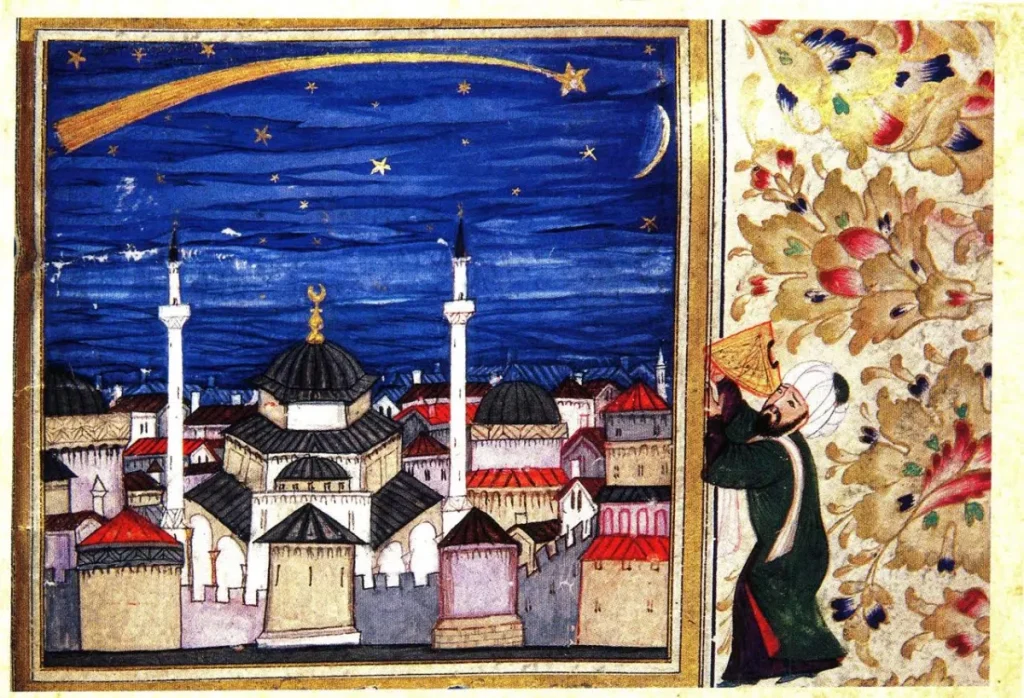
It was November 1577. A massive fireball appeared in the skies of Istanbul, watched by the populace with both admiration and deep fear. This was the Great Istanbul Comet. Whispers circulated through the streets, and in coffeehouses and mosque courtyards the meaning of this celestial sign was debated. But on the slopes of Tophane, in a building equipped with the most advanced observation instruments the Islamic world had seen up to that day, a very different kind of commotion was taking place. The Ottoman chief astronomer Taqi al-Din al-Rasid was examining this celestial body with his enormous sextants and precision mechanical clocks never before used in astronomy.
The story of Taqi al-Din is not merely the biography of a scientist; it is an epic that tells of the intellectual zenith of the 16th-century Ottoman Empire, its technical capacity, and at the same time how the delicate balance between politics and science can end tragically—a story laden with great lessons.
CHAPTER 1: A LIFE IN PURSUIT OF SCIENCE – WHO IS TAQI AL-DIN?
Taqi al-Din Muhammad ibn Ma’ruf was born in Damascus in 1521 (or according to some sources, 1526). His educational journey is proof of how permeable and rich the Ottoman intellectual basins were. After receiving his early education from his father, Qadi Ma’ruf Efendi, he studied in the scientific centers of the time, Damascus and Cairo. Cairo was a center that preserved the astronomical heritage of the Mamluk tradition and blended it with Ottoman discipline. There, Taqi al-Din delved not only into religious sciences but also into mathematics, astronomy, and mechanics.
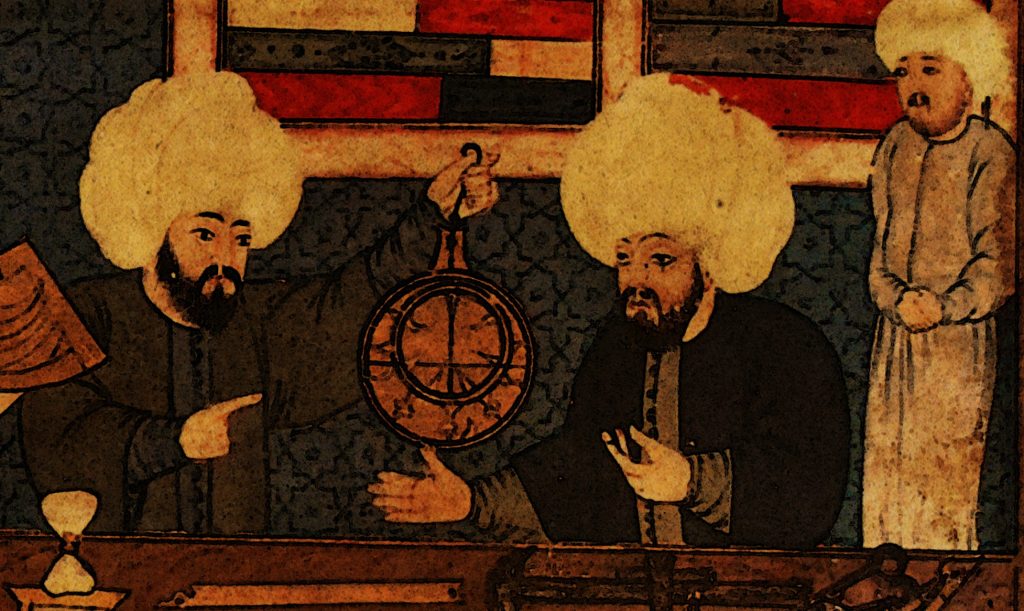
Around 1550, when he came to Istanbul with his father, he found before him the magnificent empire of Suleiman the Magnificent. He attended the assemblies of the great scholars of the period, Çivizâde and Ebussuûd Efendi. However, the most distinguishing feature of Taqi al-Din was his “Hezarfen” (polymath, literally “a thousand sciences”) personality. He was not only an astronomer; he was also an engineer who designed water pumps, a physicist who wrote treatises on optics, and, most importantly, a genius in mechanical clocks.
After serving as a qadi and a professor in Egypt, he returned permanently to Istanbul in 1570. Upon the death of Sultan Selim II’s Chief Astronomer Mustafa Çelebi, he was appointed to the office of Chief Astronomer (Müneccimbaşı). This post was a stepping stone to realizing his dreams. For Taqi al-Din had one goal in mind: to establish the greatest observatory in the Islamic world since the one built by Ulugh Beg in Samarkand, and to renew the outdated astronomical tables (Zīj).
CHAPTER 2: BUILDING A DREAM – DAR AL-RASAD AL-JADID
With the support of the powerful Grand Vizier Sokollu Mehmed Pasha and Hoca Sadeddin Efendi, Taqi al-Din presented a historic project to Sultan Murad III. He explained that Ulugh Beg’s Zīj had become insufficient, that discrepancies had arisen between the calculated and observed positions of celestial bodies, and that eliminating these errors was essential both for the prestige of the state and for the accuracy of calendars.
Sultan Murad III was a ruler interested in science and art. He approved Taqi al-Din’s project, and construction began on “Dar al-Rasad al-Jadid” (the New Observatory) on the slopes of Tophane, in a location thought to be near today’s French Palace.
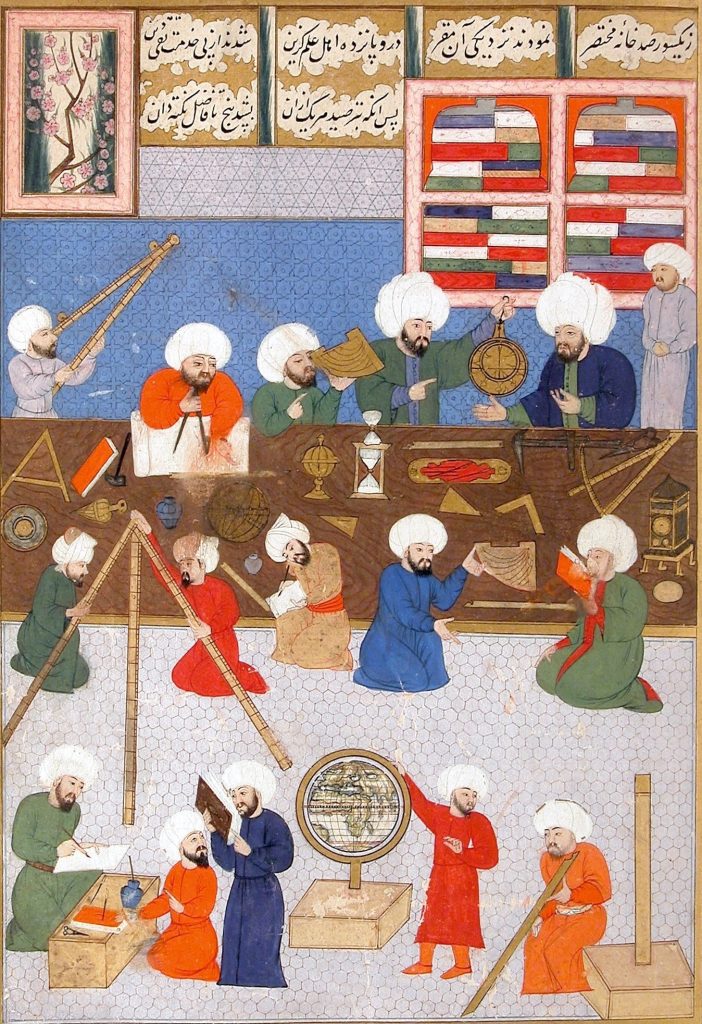
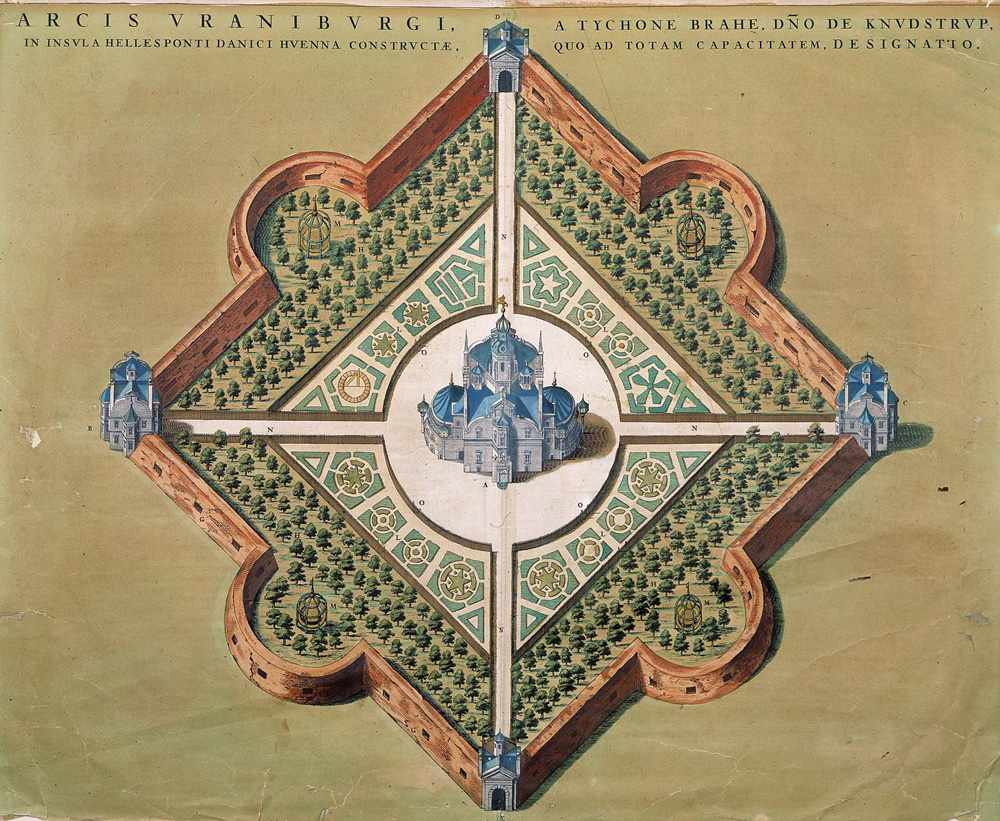
This observatory was no ordinary building. According to sources, it was a complex that included a library, administrative rooms, and observation towers where colossal instruments were installed. Taqi al-Din began working day and night there with a select team of 15 (8 observers, 4 scribes, and 4 assistants). The observatory’s budget and resources far exceeded those of similar institutions established in Europe at the time. In fact, historians of science compare Taqi al-Din’s observatory to the famous Uraniborg of the Danish astronomer Tycho Brahe, noting that in terms of equipment, Taqi al-Din’s was superior.
CHAPTER 3: A TECHNICAL MARVEL – THE OBSERVATORY INSTRUMENTS
Taqi al-Din’s genius lay in the instruments he used. Not content with merely using what already existed, he invented new instruments and rebuilt old ones on a colossal scale. In his work “Âlât-ı Rasadiyye li Zîc-i Şehinşâhiyye” (Observational Instruments for the Imperial Zīj), he illustrated and described each of these instruments. Here are some of those engineering marvels:
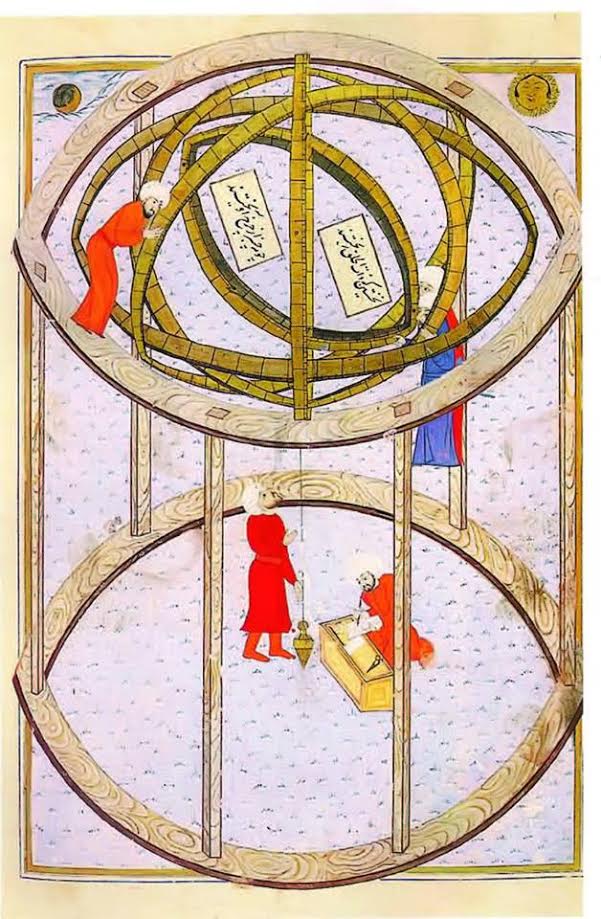
- Zāt al-Ḥalaq (Armillary Sphere): A massive sphere consisting of 6 interlocking rings used to measure the latitude and longitude of celestial bodies. Taqi al-Din’s model had a diameter of over 4 meters, which enormously increased measurement precision.
- Libne (Mural Quadrant): A giant fixed quadrant mounted on a wall, used to measure the meridian transits and altitudes of stars. Taqi al-Din’s Libne was 6-7 meters in diameter. In the West, an instrument of this size would only be used years later by Tycho Brahe.
- Zāt al-Samt wa’l-Irtifā‘ (Azimuth Semi-circle): This instrument, which measured the altitude above the horizon and the direction (azimuth) of celestial bodies, is considered the ancestor of the modern theodolite.
- Zāt al-Awtār (Chord Instrument): This is an invention of Taqi al-Din himself. Used to determine the equinoxes, it operated on the principle of the bow and chord, demonstrating his mastery of trigonometry.
- Mushabbaha bi’l-Manāṭiq (Sextant): This instrument, used to measure the angular distance between stars, was a special design improved by Taqi al-Din.
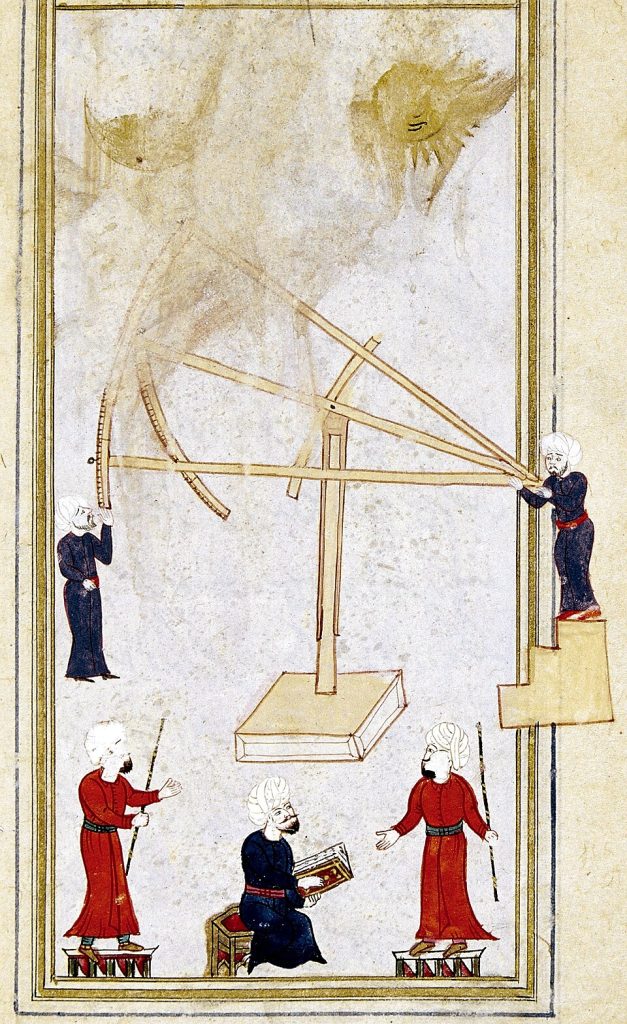
- Mechanical Clocks: Perhaps Taqi al-Din’s greatest contribution to the history of astronomy is this. Until then, time measurement in astronomy was performed with sundials or water clocks, which reduced precision. Taqi al-Din was one of the first to use a mechanical clock capable of showing seconds as an astronomical observation tool. This reduced the margin of error in observations to a minimum.

CHAPTER 4: SCIENTIFIC LEGACY AND MATHEMATICAL REVOLUTION
Taqi al-Din was not only making observations; he was also developing new mathematical methods to process the data he obtained. His work in trigonometry, in particular, was far ahead of his time.
- Decimal Fractions: While astronomers of the time were using the sexagesimal (base-60) number system, Taqi al-Din adapted decimal fractions to astronomy, simplifying and accelerating computational procedures.
- Trigonometric Functions: He clarified the definitions of sine, cosine, tangent, and cotangent, and prepared tables for them.
- Obliquity of the Ecliptic: Taqi al-Din calculated the Earth’s axial tilt (the angle between the ecliptic and the equator) as 23 degrees 28 minutes 40 seconds. The value we know today with modern technology is 23 degrees 27 minutes. The difference is only 1 minute 40 seconds—an almost unbelievable achievement for 16th-century technology.
The “al-Zīj al-Shāhinshāhī” (the Imperial Zīj) he prepared was a candidate to be the most comprehensive and accurate star catalog produced up to that time.
CHAPTER 5: TURNING POINT AND TRAGEDY
While the observatory was operating at full capacity, the famous comet of 1577 appeared. Taqi al-Din interpreted this event for Sultan Murad III. Judging by the comet’s brightness and motion, he declared it a harbinger of victory for the Ottoman army on the Persian campaign. Indeed, the Ottoman army was winning victories. But in Istanbul, things were not going well.
A great plague epidemic struck the city, causing the death of thousands. The populace was gripped by fear and mourning. In this atmosphere of social trauma, political rivalries also came to a head. In the palace, there was a faction that wanted to break the power of Grand Vizier Sokollu Mehmed Pasha. Taqi al-Din was a scholar supported by Sokollu. Sokollu’s rivals made the observatory and Taqi al-Din their target.
The report allegedly presented to the Sultan by the contemporary Şeyhülislam Kadızade Ahmed Şemseddin Efendi ignited the fuse that would bring the observatory to an end. According to historians, the propaganda that observing the heavens brought misfortune and that trying to learn the secrets of the angels caused calamities (the plague) found fertile ground in the sensitive psychology of the time. However, the point to note here is this: This was not a case of Islam clashing with science, but rather science being used as a political tool and sacrificed to political score-settling. The political maneuvers of Hoca Sadeddin Efendi and the pressure of the anti-Sokollu front put Sultan Murad III in a difficult position.
CONCLUSION: CANNONBALLS FROM THE SEA AND AN UNFINISHED STORY
On January 22, 1580, by order given to the Kapudan Pasha Kılıç Ali Pasha, that magnificent structure at Tophane was bombarded from the sea. The destruction was not only of stone walls but of a civilization’s scientific momentum. The observatory was razed to the ground, the instruments were shattered, and the years of labor of Taqi al-Din and his team were buried under the rubble.
After the destruction, Taqi al-Din withdrew into himself and passed away in 1585. His works, his Zīj, and his observations unfortunately could not be fully published and become common property of the scientific world as those of his European contemporaries did. Yet the observations of Tycho Brahe, who lived in the same period, were transformed, in the hands of his student Kepler, into the laws of modern astronomy (Kepler’s Laws).
Looking back today, the affair of Taqi al-Din’s observatory reminds us of this: Scientific progress is possible not only through technical knowledge but through the existence of a societal and administrative will that supports, protects, and keeps science free from political turmoil. The Ottoman Empire missed the opportunity for a “Scientific Revolution” that it had grasped with Taqi al-Din, due to internal power struggles and conjunctural fears.
Yet Taqi al-Din’s legacy has re-emerged from beneath the demolished walls centuries later. Today, his works, designs, and genius are read as one of the brightest pages of Turkish-Islamic scientific history and continue to inspire future generations. Remembering him is not merely a nostalgia for the past, but a responsibility to understand the value of science while building the future.
BIBLIOGRAPHY
Primary and Fundamental Works (Modern Studies)
- Tekeli, Sevim.16. Yüzyılda Osmanlılarda Saatler ve Takiyüddin’in Mekanik Saat Konstrüksiyonuna Dair En Parlak Yıldızlar Adlı Eseri [Clocks in the Ottoman Empire in the 16th Century and Taqi al-Din’s Work Titled The Brightest Stars for the Construction of Mechanical Clocks]. Ankara: Kültür Bakanlığı Yayınları [Ministry of Culture Publications], 2002.
- (Note: This is the fundamental work proving the use of mechanical clocks in astronomy, as mentioned in the article, and Taqi al-Din’s pioneering role in this field.)
- İhsanoğlu, Ekmeleddin.Osmanlı Bilim Mirası [The Ottoman Scientific Heritage]. İstanbul: Yapı Kredi Yayınları, 2010.
- (Note: It is the main source consulted to understand the functioning of Ottoman scientific institutions and the place of the observatory in the general history of science.)
- Sayılı, Aydın.The Observatory in Islam and Its Place in the General History of the Observatory. Ankara: Türk Tarih Kurumu Yayınları [Turkish Historical Society Publications], 1960.
- (Note: It is one of the most comprehensive works written on this subject in world literature. It is essential for understanding the institutional structure of the observatory. – Note: Since the original title of the book was published in English, it has been kept as is.)
- Demir, Remzi.Takiyüddin’in Ceride-i Dürer ve Haride-i Fiker Adlı Eseri ve Onun Ondalık Kesirleri Astronomiye Uygulaması [Taqi al-Din’s Work Titled Ceride-i Dürer ve Haride-i Fiker and His Application of Decimal Fractions to Astronomy]. Ankara: Ankara Üniversitesi Dil ve Tarih-Coğrafya Fakültesi Yayınları [Ankara University Faculty of Languages, History and Geography Publications], 1998.
- (Note: It is the source of the technical details regarding the “mathematical revolution” and the use of decimal fractions mentioned in the article.)
- Dizer, Muammer. “Takiyüddin” [Taqi al-Din]. Türk Ansiklopedisi [Turkish Encyclopedia], Vol. 30. Ankara: Milli Eğitim Bakanlığı [Ministry of National Education], 1981.
- Unat, Yavuz. Tarih Boyunca Türklerde Gökbilim [Astronomy Among Turks Throughout History]. İstanbul: Kaynak Yayınları, 2008.
Encyclopedia Articles (TDV Encyclopedia of Islam)
- Adıvar, Adnan & İhsanoğlu, Ekmeleddin. “Takiyüddin er-Râsıd” [Taqi al-Din al-Rasid]. TDV İslâm Ansiklopedisi [TDV Encyclopedia of Islam], Vol. 39, pp. 463-466. İstanbul: TDV Yayınları [TDV Publications], 2010.
- Kaçar, Mustafa. “Rasathane” [Observatory]. TDV İslâm Ansiklopedisi [TDV Encyclopedia of Islam], Vol. 34, pp. 453-457. İstanbul: TDV Yayınları [TDV Publications], 2007.
Digital Sources
- Wikipedia Contributors. “Takiyüddin” [Taqi al-Din]. Wikipedia, The Free Encyclopedia. Accessed: January 16, 2026. https://tr.wikipedia.org/wiki/Takiy%C3%BCddin
- Wikipedia Contributors. “Takiyüddin’in Rasathanesi” [Taqi al-Din’s Observatory]. Wikipedia, The Free Encyclopedia. Accessed: January 16, 2026. https://tr.wikipedia.org/wiki/Takiy%C3%BCddin%27in_Rasathanesi
⚖️
License and Copyright Notice
Media usage rules
Check the license/copyright information for all media files (images, videos, audio, documents, etc.) included in this content from the relevant work descriptions.
📚 Read the Terms and Conditions