
Anatolian Kilim Motifs: The Hidden Language of Symbols, Protection, and Fertility
Explore the ancient symbols woven into Anatolian kilims. Discover the meanings behind the evil eye, hands on hips, ram's horn and more—a journey into a silent, magical language.
Introduction: Tracing a Silent Language
The kilims spread across the steppes of Anatolia, in mountain houses, and village rooms are not merely simple objects that protect from the cold or decorate the floor. They are the carriers of a collective memory spanning thousands of years and a symbolic language, into which the weaving woman’s hand has intricately knotted the warmth of her touch, the vibrations of her heart, her longings, fears, and hopes. These kilims speak through every motif they bear, telling a story, voicing a wish, a prayer, or a spell.
In this article, we will go beyond the riot of colors and eye-catching patterns of Anatolian kilims and attempt to decipher their hidden language. We will examine how our ancestors imbued kilims with “spells” to protect against the evil eye, summon abundance, reunite with a lover, or purify from evil; and explore the profound meanings behind each geometric shape and each stylized animal figure. This journey will introduce us not only to a handicraft but also to a cultural treasure that carries the codes of the spiritual world and ancient belief systems of the Anatolian people.
1. The Kilim: The Philosophy of Weaving and Historical Roots
To understand a kilim, one must first understand what it is and its historical background.
1.1. The Technique and Meaning of Kilim Weaving
The kilim is a type of flat-woven textile produced using the “flatweave” technique, where patterns are created by changing the color of the weft threads, and it is without pile. This technique grants the weaver great expressive freedom. Every color change is a decision; every knot is an intention. The back and front of a kilim are identical, which is interpreted as a metaphor for its “sincerity” and “inner-outer integrity.” The weaver neither tries to hide anything nor leaves chaos in the background. Everything is apparent, much like the hospitable and open-hearted spirit of the Anatolian people.
1.2. A Brief Look at the Historical Roots
The roots of Anatolian kilim art stretch back to the Neolithic Age, and even earlier. The geometric patterns seen in Çatalhöyük wall paintings bear striking similarities to the motifs we see on kilims today. Weaving traditions brought from Central Asia blended with Hittite, Phrygian, Urartian, Byzantine, and ultimately Seljuk and Ottoman cultures in Anatolia, creating a unique synthesis. With the Seljuks, stylized animal and plant motifs and geometric compositions developed; during the Ottoman period, this tradition was enriched as each region developed its own unique understanding of color and pattern. Every kilim is a cultural carrier, passing a part of this long and ancient history on to the next generation.
2. The Universal Language of Motifs: The Cornerstones of Symbolism
The symbolism in kilims is humanity’s oldest and most universal language. This language is fundamentally shaped around three major archetypes:
- Protection: The need for protection from supernatural forces, the evil eye, and malevolence.
- Fertility and Abundance: The productivity of the land, animals, and people, and the continuation of lineage.
- Attachment and Belonging: Love, marriage, tribal or clan identity.
These fundamental needs, and the effort to transform abstract concepts into concrete symbols, are the points of origin for kilim motifs.
3. Motifs for Protection from the Evil Eye and Malevolence
The eye is one of humanity’s most ancient fears. The belief in the “evil eye” is based on the idea that a malevolent gaze or envy can harm a person or property. Kilims function as a shield against this negative energy, a “protection spell.”
3.1. The Evil Eye Motif and Eye Symbolism
The evil eye motif is typically represented by concentric rings, with colors radiating outward from the center (usually black, blue, white, yellow). This motif functions as a talisman that “attracts and neutralizes” malevolent glances. It is believed that when woven into the most conspicuous parts of the kilim, such as the center or the edge borders, it protects the home and family from all kinds of negative external energy. This motif is a universal symbol seen across a wide geography stretching from ancient Mesopotamia to the Mediterranean.
3.2. Amulet and Cross Motifs
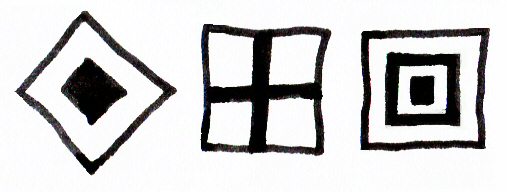
The Amulet 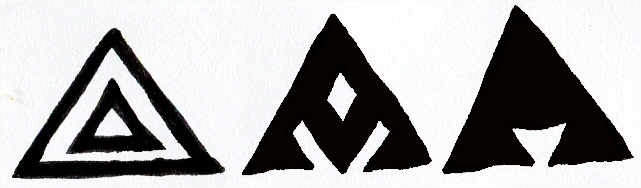 motif is a symbol in a triangular or rectangular form, filled with patterns inside. It represents the amulets worn around the neck, filled with written prayers and verses and then folded. It is believed to possess the power to ward off evil, illnesses, and the evil eye. The Cross
 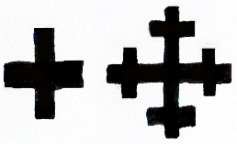 motif, on the other hand, is a protection symbol dating back to pre-Christian times, representing the four elements (earth, water, air, fire) or the four cardinal directions. The ends of the cross are believed to close off openings through which evil spirits might enter, thus creating a zone of protection.
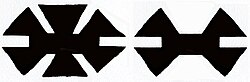
3.3. Wolf’s Trace (Wolf’s Mouth/Claw)
This motif generally consists of interlocking “S” or “C” forms, resembling a chain. In nomadic Turkic culture, the wolf is a sacred and guiding animal. When the wolf’s trace motif is woven into a kilim, it is believed to place the home and tent under the protection of an entity as powerful and protective as a wolf. It is thought to form a barrier that prevents the entry of evil spirits and the evil eye.
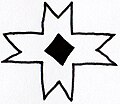
3.4. Star and Sun Motifs
Eight-pointed stars, sun discs, and other radial motifs represent the power that disperses darkness, illuminates, and warms. Considering that evil is often associated with darkness and cold, these motifs are believed to be powerful protectors. They are also symbols of abundance and the source of life.
4. Motifs of Abundance, Reproduction, and Life
For societies that rely on agriculture and animal husbandry, fertility is of vital importance. Kilims are part of rituals performed for a bountiful harvest, the multiplication of livestock, and the continuation of the family lineage, serving as a kind of “fertility spell.”
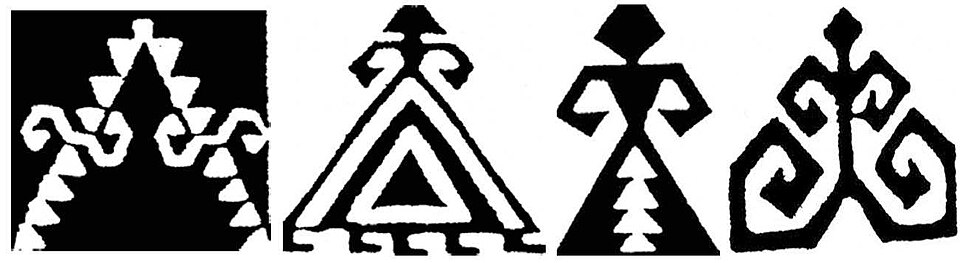
4.1. The Hands on Hips (Elibelinde) Motif
Perhaps the most recognized and striking motif of Anatolian kilims. It represents a stylized female figure: the upper part is the head and arms, the central triangle or lozenge is the waist and hips, and the lower part is the legs. This motif is the most potent symbol of fertility, femininity, and motherhood. It is known that young girls wishing to marry or women wanting to have children frequently wove this motif. The motif is also a millennia-old reflection of the “mother goddess” (Cybele) cult.
4.2. Ram’s Horn and Animal Motifs
It is the symbol of power, masculinity, and virility. The ram is seen as the leader and protector of the flock. The Ram’s Horn motif 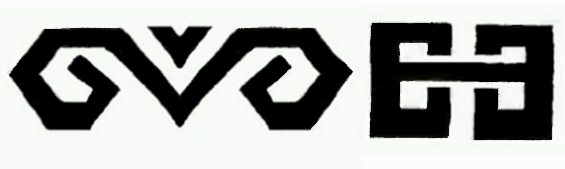 symbolizes both male strength and fertility, and the strength and continuity of the family/household. The bird motif
 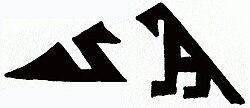 represents the soul’s freedom, news, and paradise; the scorpion motif
 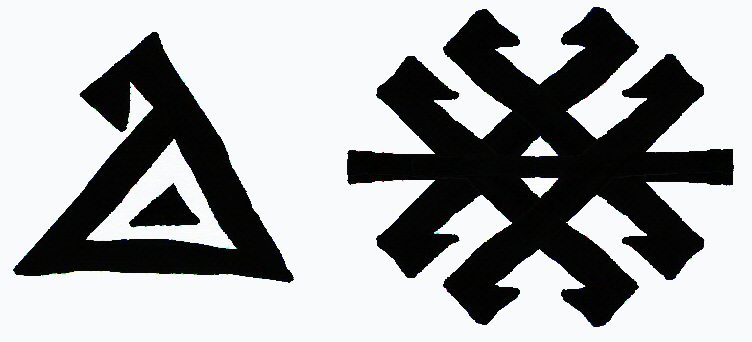 wards off evil with its venom and danger; and the dragon motif
 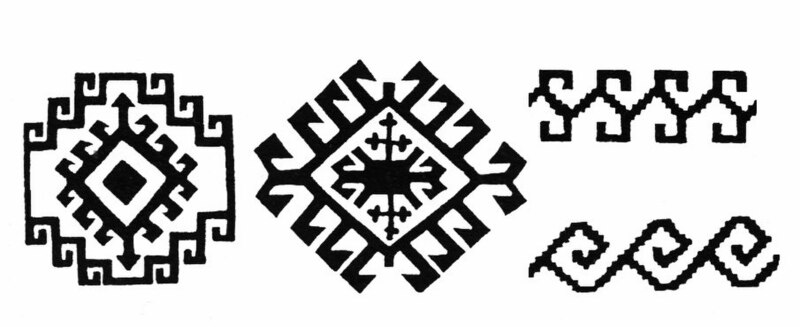 represents eternity and protection. These animal figures are rendered not realistically, but in a highly stylized and abstract manner.
4.3. Running Water and Fertility Symbolism
In the arid lands of Anatolia, water means life. Wave-like or zigzag patterns, called the “running water” motif, symbolize flowing water on the kilims. It is believed that this motif brings abundance, plenty, and cleanliness to the home where it is woven. There is also a belief that flowing water will wash away the evil eye and malevolence.
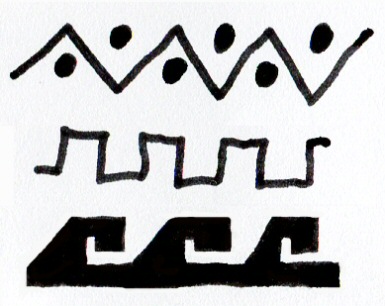
4.4. Tree and Tree of Life Motif
The tree of life, connecting the earth with its roots and the sky with its branches, is a symbol of immortality, the continuation of lineage, and paradise in Anatolia, as in many cultures. In kilims, it is usually rendered symmetrically with branches and twigs. A tree of life on a kilim placed in the center of a home signifies the home’s permanence and rootedness.
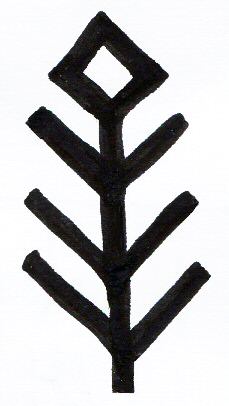
4.5. Wheat Ear and Pomegranate Motif
Throughout history, wheat has been the most fundamental symbol of abundance. The wheat ear motif represents a wish for a bountiful harvest and freedom from hunger. The pomegranate, with its countless seeds, symbolizes abundance and fertility, and with its red color, it symbolizes luck and productivity. The pomegranate motif is frequently used, especially in bridal trousseaus.
5. Magic, Talisman, and Other Mystical Motifs
Kilims are also a concrete expression of beliefs in magic and talismans. Some motifs are believed to activate supernatural forces to produce specific outcomes.
5.1. Spell and Binding Motifs
“Binding” or “knot” motifs are symbols used to strengthen a relationship or to “bind” something. For example, a young girl who wants her lover to be bound to her might weave this motif. Similarly, these motifs are used with the intention of “binding the tongue” of an enemy for protection against their evil. This is a reflection of the power of words and intention woven into the fabric.
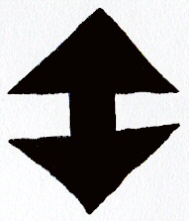
5.2. Burdock and Shield Motifs
The burdock motif, with its thorny structure, is a symbol that keeps away malevolent people and energies. It practically functions as an “barbed wire.” The shield motif represents a sturdy armor that protects the home and family from all kinds of invisible dangers.
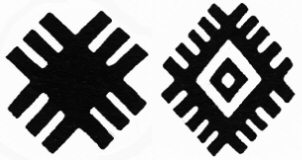
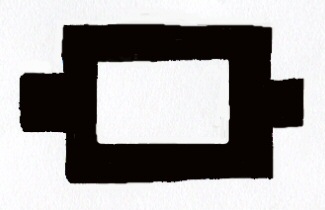
5.3. Chest Motif (Trousseau Chest)
Commonly seen in bridal trousseaus, this motif represents the dowry chest a bride brings to her husband’s home. This chest contains not just material goods but also the bride’s family heritage, culture, and hopes for the future. The chest motif carries all these meanings.
6. The Language of Colors: Hues of Emotion and Meaning
Kilim symbolism is not limited to motifs alone. The colors used also carry profound meanings. These vibrant colors, obtained from natural root dyes, are also a medium for expressing feelings and intentions.
- Red: The primary color. It represents life, blood, love, lust, power, victory, and protection from the evil eye. It is used extensively in wedding kilims and bridal chambers.
- Blue: As the color of the sky and water, it symbolizes eternity, immortality, peace, and truth. It is also considered one of the most effective colors against the evil eye.
- Green: Became a sacred color with Islam. It represents paradise, rebirth, abundance, freshness, and hope.
- White: Signifies purity, cleanliness, light, and happiness. However, it can also be a color of mourning in some regions.
- Black: Represents power, earth, ground, and sorrow. It is generally used for contour lines and to accentuate other colors.
- Yellow/Baltic Yellow: The color of the sun, gold, and melancholy. While it evokes abundance and plenty, it can also signify separation and illness.
7. Regional Motif Diversity: The Mosaic Texture of Anatolia
Each region of Anatolia has woven its own cultural identity, history, and geography into its kilims.
- Konya (Ladik, Karapınar): Elegant and stylized animal motifs carrying Seljuk heritage, famous mihrab patterns known as the “Ladik tulip.”
- Kayseri (Bünyan, Yahyalı): Delicately woven kilims in pastel tones, adorned with geometric patterns, themed around “love” and “abundance.”
- Uşak, Gördes, Demirci: Famous for their “medallion” (central) designs, rich variety of borders, and deep red colors.
- Eastern and Southeastern Anatolia (Van, Hakkari, Şırnak): A more primal and powerful expression. Symbols emphasizing tribal identity, such as the “broom” motif, “eagle wing,” and “ram’s horn,” are prevalent. Colors are darker and more contrasting.
- Aegean (Milas, Çanakkale, Bergama): Characterized by naturalistic flower motifs, and tassels known as “burma” and “cıngıl.”
8. The New Meanings and Use of Kilim Motifs Today
Traditional kilims are no longer found only in village houses or collections; they have carved a solid place for themselves in modern interior design, fashion design, and accessories. This rediscovery is also transforming the language of kilim motifs.
Today, when a young person wears a t-shirt with an “evil eye” motif, they might not fully know the thousands-year-old belief in protection, but they carry this symbol as a “style statement” and a sign of “cultural belonging.” A kilim spread in a home is now evaluated not just as a floor covering but as an “authentic decorative element” and a “work of art with a story.” This process ensures the survival of ancient symbols in the modern world and their transmission to new generations.
Conclusion: A Heritage Woven Knot by Knot
Anatolian kilims are not ordinary woven fabrics but cultural codes carrying the purest expressions of the human soul. Each motif is the concretized form of a prayer, a hope, a fear, or a joy. An eye in the blue of an evil eye bead is a mother’s protective prayer for her child. A ‘hands on hips’ motif shining on a red background is an echo of the millennia-old mother goddess cult. A brown ram’s horn is the sign of a nomadic shepherd’s pride in his flock.
These kilims show us that art never merely reflects what is “beautiful”; it also encompasses what is “meaningful,” “sacred,” and “functional” within itself. For centuries, the women weavers of Anatolia wove not only threads but also beliefs, rituals, and collective memory. Understanding this legacy they left behind is not just a study of art history; it is also a profound journey of discovery into the spiritual adventure of humankind and the mosaic of cultures that sprouted in the ancient lands of Anatolia. When you look at a kilim now, you can see not just its patterns and colors, but also the magical story it silently tells.
Bibliography and Further Reading Suggestions
Bibliography
- Deniz, Bekir. (1999). Türk Dünyasında Halı, Kilim ve Cicim Dokumaları [Carpet, Kilim and Cicim Weavings in the Turkic World]. Bilge Kültür Sanat.
- Durul, Y. (1977). Türk Kilim Desenleri Üzerine Bir Araştırma [A Study on Turkish Kilim Patterns]. Ak Yayınları.
- Enez, N. (2018). Anadolu Kilimlerinin Dili: Semboller ve Anlamları [The Language of Anatolian Kilims: Symbols and Meanings]. Geleneksel Yayıncılık.
- Gürsu, N. (1988). Türk Dokumacılık Sanatı: Cicim, Zili, Sumak, Kilim [Turkish Weaving Art: Cicim, Zili, Soumak, Kilim]. Redhouse Yayınevi.
- Ögel, B. (1991). Türk Kültür Tarihine Giriş, Cilt 4-5 [Introduction to Turkish Cultural History, Vol. 4-5]. Kültür Bakanlığı Yayınları [Ministry of Culture Publications].
- Sürür, A. (2007). Anadolu Kilimlerinde Gizli Dil [The Secret Language of Anatolian Kilims]. Kapı Yayınları.
- Yetkin, S. (1991). Türk Halı Sanatı Tarihi [History of Turkish Carpet Art]. İş Bankası Kültür Yayınları [İş Bankası Cultural Publications].
Further Reading Suggestions
- Anadolu’da Kilim Dokuma Geleneği ve Motiflerin Dili [The Tradition of Kilim Weaving in Anatolia and the Language of Motifs] – (Compilation) Türkiye İş Bankası Kültür Yayınları.
- Kilim: A Cultural Heritage – Josephine Powell.
- (Note: This English work is a visually rich source on the subject).
- Türkmen Kilimleri [Turkmen Kilims] – Hans Eberhart Catalog.
- (Note: Ideal for observing the similarities between motifs in Turkmen kilims and Anatolian ones).
- Anadolu Motiflerinden Sergiler [Exhibitions of Anatolian Motifs] – Sabancı Müzesi Yayınları [Sabancı Museum Publications].
- (Note: Various museum catalogs are ideal for visually examining the motifs).
- Yörük: The Nomadic Weaving Tradition of the Middle East – James M. Keshishian.
- (Note: Recommended for understanding the nomadic weaving culture).
Image Sources
- Image 1: “Eye Kilim Motif” – Chiswick Chap (Source: Wikipedia). License: CC BY-SA 4.0
- Image 2: “Amulet Kilim Motif” – Chiswick Chap (Source: Wikipedia). License: CC BY-SA 4.0
- Image 3: “Cross Kilim Motif” – Chiswick Chap (Source: Wikipedia). License: CC BY-SA 4.0
- Image 4: “Wolf’s Mouth Kilim Motif” – Chiswick Chap (Source: Wikipedia). License: CC BY-SA 4.0
- Image 5: “Star Kilim Motif” – Chiswick Chap (Source: Wikipedia). License: CC BY-SA 4.0
- Image 6: “Elibelinde2” – Chiswick Chap (Source: Wikipedia). License: CC BY-SA 4.0
- Image 7: “Ram’s Horn Kilim Motif” – Chiswick Chap (Source: Wikipedia). License: CC BY-SA 4.0
- Image 8: “Bird Kilim Motif, for luck and happiness, etc” – Chiswick Chap (Source: Wikipedia). License: CC BY-SA 4.0
- Image 9: “Scorpion kilim motif” – Chiswick Chap (Source: Wikipedia). License: CC BY-SA 4.0
- Image 10: “Dragon Kilim Motif” – Chiswick Chap (Source: Wikipedia). License: CC BY-SA 4.0
- Image 11: “Running Water Kilim Motif” – Chiswick Chap (Source: Wikipedia). License: CC BY-SA 4.0
- Image 12: “Tree of Life Kilim Motif” – Chiswick Chap (Source: Wikipedia). License: CC BY-SA 4.0
- Image 13: “Fetter Kilim Motif” – Chiswick Chap (Source: Wikipedia). License: CC BY-SA 4.0
- Image 14: “Burdock Kilim Motifs” – Chiswick Chap (Source: Wikipedia). License: CC BY-SA 4.0
- Image 15: “Trousseau Chest Kilim Motif” – Chiswick Chap (Source: Wikipedia). License: CC BY-SA 4.0
⚖️
License and Copyright Notice
Media usage rules
Check the license/copyright information for all media files (images, videos, audio, documents, etc.) included in this content from the relevant work descriptions.
📚 Read the Terms and Conditions