

Beyond Rumi’s Shadow: Sadreddin Konevi and the Construction of Systematic Sufi Philosophy in 13th-Century Konya
Explore the philosophical legacy of Sadreddin Konevi, the 13th-century scholar who systematized Ibn Arabi’s doctrine of Wahdat al-Wujud in Konya. This article analyzes his life, works, and complementary relationship with Rumi, highlighting their lasting impact on Anatolian Sufi thought.
Introduction: The Beginning of a Story of Construction
13th-century Anatolia was a unique period marked by political upheavals, migrations, and the intersection of cultures, while simultaneously witnessing a spiritual revival. Konya, in particular, stood as the capital of this revival. This ancient city, a refuge for scholars, mystics, and thinkers fleeing the Mongol invasions, had become a veritable “hearth of wisdom.” Within this historical and cultural backdrop, two great souls, Sadreddin Konevî and Mevlânâ Celâleddin-i Rûmî, breathed the same air in the same city and century, pioneering the construction of two distinct yet complementary Sufi paths.
The aim of this article is to re-read Sadreddin Konevî, who generally remained in Mevlânâ’s shadow, by centering on the profound and systematic Sufi philosophy he established in Konya. Konevî is not merely a disciple or transmitter; on the contrary, he is a “founding father” who rationalized, commented upon, and inscribed into the Anatolian landscape the doctrine of Wahdat al-Wujūd (the Unity of Being), which his stepfather and teacher Muhyiddin Ibn Arabī had grounded as “al-Shaykh al-Akbar” (the Greatest Master). His relationship with his neighbor and friend Mevlânâ provides a living example of expressing the same truth through different languages (reason and heart, philosophy and love).
This study will analyze, through Konevî’s life, works, and ideas, what kind of philosophical-Sufi construction took place in 13th-century Konya; it will reveal the intersecting and diverging aspects of this construction with Mevlânâ’s message; and examine the roles of both thinkers in Islamic thought and the formation of Anatolian Muslim identity.
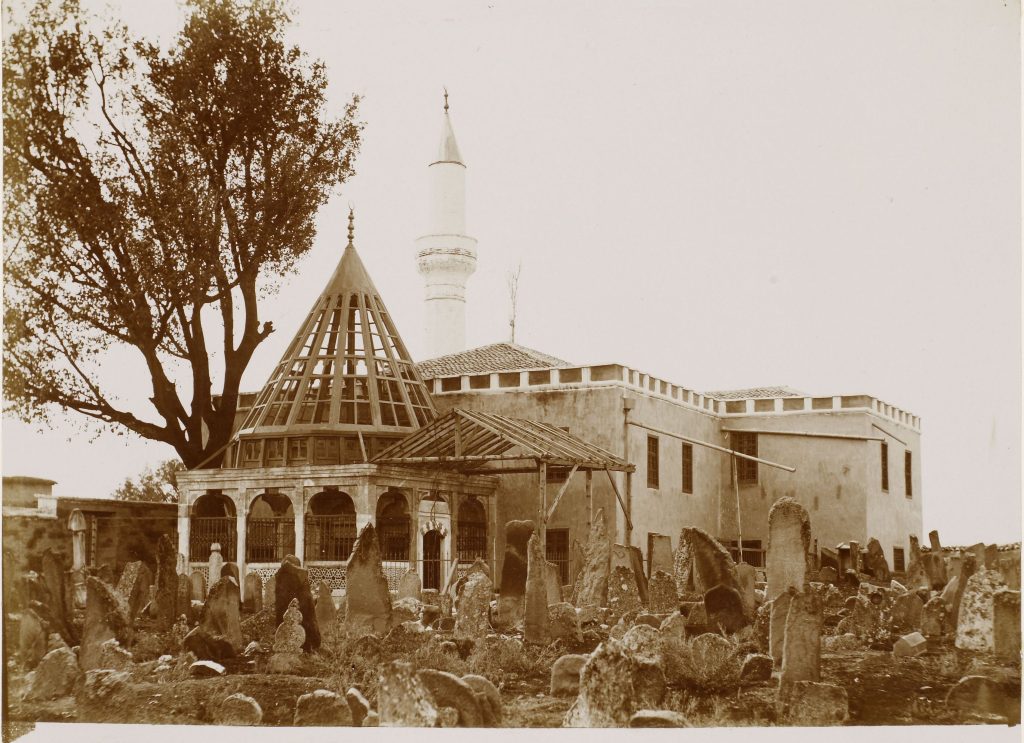
I. Ground and Time: The Intellectual and Spiritual Climate of 13th-Century Konya
Konya, as the capital of the Anatolian Seljuk State in the 13th century, represented a political, economic, and cultural zenith. Yet this zenith possessed a structure that was both fragile and dynamic under the Mongol threat.
- Political and Cultural Context: Anatolia had become a center of attraction for intellectual and spiritual figures from all over the Middle East due to the Mongol invasions. This migration transformed Konya into an “intellectual sanctuary.” Different traditions, languages, and schools of thought converged here, creating a fertile environment of interaction.
- Spiritual Atmosphere: The city was adorned with Sufi orders, lodges, and madrasas. A wide spectrum ranging from the dervishes of Ahmed Yesevî to Andalusian Sufis contributed directly to the Islamization and Sufi fermentation of Anatolia. This environment functioned as a “spiritual laboratory” where profound metaphysical issues were debated, and where poetry, semâ (spiritual audition), and philosophical discipline were interwoven.
It was this rich and complex ground that prepared the most suitable soil for both Sadreddin Konevî’s systematic philosophy and Mevlânâ’s ecstatic poetry to sprout.
II. The Life Journey of Sadreddin Konevî as a Mudarris and Thinker
Sadreddin Konevî (1210–1274) is a figure who shouldered two great legacies throughout his life: on one hand, the kinship bond and neighborhood relationship he formed with Mevlânâ through his mother, and on the other, the intellectual legacy he inherited from his stepfather and primary teacher, Ibn Arabī.
- Early Period and the Influence of Ibn Arabī: At a young age, following his mother’s marriage to Ibn Arabī, Konevî came under the direct upbringing and instruction of the greatest Sufi thinker of the era. Ibn Arabī trained him not only in Sufi matters but also in fiqh (jurisprudence), hadith, tafsir (Qur’anic exegesis), and the linguistic sciences, addressing him as “my son.” This relationship entrusted Konevî with the responsibility of assimilating and systematizing Ibn Arabī’s vast and often difficult-to-understand ideas.
- Settling in Konya and His Teaching Career: After Ibn Arabī’s death, Konevî settled in Konya and began teaching as a mudarris (professor). His circle of students was not merely composed of dervishes interested in Sufism; it was a distinguished intellectual milieu attended also by madrasa-trained scholars and jurists. This demonstrates that Konevî’s ideas were not a “street-level” mysticism but rather a “science” debated and defended on rational grounds.
- His Relationship with Mevlânâ: There existed a deep spiritual friendship and mutual respect between Konevî and Mevlânâ. According to accounts, the philosophical and theological discussions held between them broadened the horizons of both parties. It is recorded that Sadreddin Konevî led Mevlânâ’s funeral prayer upon his death—an extremely meaningful historical detail demonstrating the strength of their bond.
III. The Cornerstones of the Construction: Outline of Konevî’s Sufi Philosophy
Konevî’s primary great contribution was to arrange Ibn Arabī’s vast, scattered, and often poetically expressed ideas into a logical order, transforming them into a coherent and comprehensible system. His works serve virtually as the “textbooks” of the Ibn Arabī school.
A. Metaphysics of Being: The Systematization of Wahdat al-Wujūd
The doctrine of Wahdat al-Wujūd (the Unity of Being) stands at the center of Konevî’s philosophy. However, he treats this doctrine with his own distinctive terminology.
- Absolute Being (Wujūd al-Mutlaq) and Contingent Being: According to Konevî, true and real being (al-Wujūd al-Haqq) belongs solely to God. He is the Absolute Being whose existence is necessary by virtue of His Essence (Wājib al-Wujūd). Everything besides Him—the universe and all entities within it (contingents)—consists of the manifestations and theophanies of the Absolute Being. These entities possess no real being of their own; they are shadow beings.
- Theophany (Tajallī) and the Immutable Entities (al-A‘yān): The multiplicity (kathra) we observe in the universe arises from the Absolute Being’s manifestation through His different Names and Attributes at different levels. Every entity (human, animal, plant, stone) is a concretized form (ayn al-Haqq) of a Name or Attribute of God the Exalted. This should be understood not as pantheism but as panentheism: God is present within the universe, yet the universe is not within God; God is not limited by the universe, but the universe is encompassed by Him.
- The Doctrine of the Perfect Human (Insān al-Kāmil): For Konevî, the human being is the most perfect and comprehensive fruit of this process of manifestation. As the “microcosm” (ālam al-saghīr), the human contains within themselves all the truths and Divine Names present in the macrocosm (ālam al-kabīr). The Perfect Human, on the other hand, is the one who has fully realized this potential and has become a “barzakh” (isthmus/bridge) between the Truth and Creation—between the Creator and the created. They are God’s vicegerent on earth. This doctrine bears a deep parallel with Mevlânâ’s “Hamûş” (the Silent One) and the ideal human type found in his Mathnawī.
B. The Relationship Between Knowledge (Ma‘rifa) and Being (Wujūd)
For Konevî, true knowledge (ma‘rifa) is knowledge of being (wujūd). Knowing the external appearances of things is not true knowledge. True knowledge is to perceive the Divine truth behind every entity—to recognize which Name it manifests. Therefore, one who does not know the levels of being cannot know the truth. This epistemological approach is an inseparable part of his metaphysics.
C. Major Works and the Texts of the Construction
Konevî’s intellectual system is concretized primarily in the following works:
- Miftāh al-Ghayb (The Key to the Unseen): This is his most important and systematic work. It addresses the relationship between being, knowledge, the human, and God-universe on a logical plane. It serves practically as an introduction to Ibn Arabī’s Fusūs al-Hikam.
- al-Nusūs (The Texts): A collection of texts that concisely explain the levels of being and the subject of theophany.
- Sharh al-Asmā’ al-Husnā (Commentary on the Beautiful Names): An exegesis of the Divine Names. It details which level of being and which theophany each Name corresponds to within Konevî’s system.
- al-Fukūk: A commentary elucidating difficult points in Ibn Arabī’s Fusūs.
These works became the foundational reference sources of the philosophical Sufi school that Konevî established in Konya.
IV. Two Different Faces of the Same Summit: A Comparison of Konevî and Mevlânâ
Although Konevî and Mevlânâ shared the same spiritual climate, they differ in their modes of expressing truth, their styles, and their emphases. This distinction is not a conflict but a relationship of complementarity.
| Aspect | Sadreddin Konevî | Mevlânâ Celâleddin-i Rûmî |
|---|---|---|
| Style | Philosophical-Theoretical | Poetic-Practical and Emotional |
| Language | Technical, Abstract, Academic | Symbolic, Narrative-Based, Ecstatic |
| Key Concepts | Wujūd, Tajallī, A‘yān Thābita, Barzakh | Love, Separation, Raw-Cooked-Burnt, Semâ |
| Method | Reasoning, Classification, Definition, Commentary | Storytelling, Metaphor, Semâ, Music |
| Target Audience | Madrasa circles, students seeking depth | People of all levels, All humanity |
| View of Being | Explains the unity of being rationally and theoretically | Feels the unity of being through love and spiritual attraction |
- Intersections in Fīhi Mā Fīh and Majālis-i Sab‘a: When Mevlânâ’s collected discourses, Fīhi Mā Fīh and Majālis-i Sab‘a, are examined, one sees that he too discusses subjects like unity (wahdat), theophany (tajallī), and the Perfect Human (insān al-kāmil). However, these discussions are conveyed through examples from daily life, stories, and metaphors rather than Konevî’s systematic and conceptual language. For instance, the process of “I was raw, I was cooked, I was burnt” is an expression, in the language of love and ecstasy, of the process Konevî explains as “passing through the levels of being.”
- Two Neighboring Truths: Ultimately, Konevî and Mevlânâ are like two great plane trees standing side by side in Konya. While one (Konevî) was solidifying the roots of truth on a metaphysical ground, the other (Mevlânâ) was extending its branches into the sky of love, tolerance, and humanity. One was the representative of “understanding,” the other of “feeling.” These two languages were not rivals but two different manifestations of the holistic spirit of Islam.
V. Influence and Legacy: The Spread of the Konevî School Across Anatolia and Beyond
The philosophical Sufi tradition that Sadreddin Konevî built in Konya quickly produced a profound impact that transcended borders.
- In Anatolia and the Ottoman World: Konevî’s students and subsequent thinkers who read his works kept this tradition alive in Anatolia and the Ottoman domains. Molla Fenārī (1350–1431) placed this legacy at the center of the Ottoman scholarly tradition with the monumental commentary he wrote on Konevî’s Miftāh al-Ghayb. Abd al-Rahmān Jāmī (1414–1492) was also a follower of Konevî in the Persian-speaking world.
- In Iran and India: Konevî’s works attracted great interest in Persian-speaking regions as well. The Ibn Arabī–Konevî school, in particular, formed one of the cornerstones of later Iranian gnostic thought.
- Contemporary Importance: In the 20th century, the French Islamic philosopher Henry Corbin became the most prominent figure to introduce Konevî to the Western world. Corbin emphasized that he was “one of the greatest masters of Islamic metaphysics.” In Turkey, the late Prof. Dr. Ekrem Demirli played a groundbreaking role in reviving this heritage by translating nearly all of Konevî’s and Ibn Arabī’s works into Turkish.
Conclusion: The Philosophical Foundation Laid in Konya
13th-century Konya was the city not only of Mevlânâ’s whirling dervishes but also of the scholars debating profound metaphysical issues in Sadreddin Konevî’s madrasa. If Mevlânâ’s universal message is the exuberant flow of a river, Konevî’s work had the function of carving out the riverbed, deepening it, and giving it direction.
Konevî was the “constructor” who came after Ibn Arabī’s “opening” (fatḥ). By rendering the doctrine of Wahdat al-Wujūd into a rational and coherent system, he built a solid philosophical ground that would nourish Islamic thought for the next seven centuries. His dialogue and friendship with Mevlânâ, moreover, demonstrate one of the strongest aspects of Islamic civilization: the capacity for reason and heart, philosophy and love, theory and practice to coexist and nourish one another.
Therefore, anyone who wishes to understand the Anatolian Sufi tradition must not only heed Mevlânâ’s call of “Come, come!” but also listen to the silent and profound philosophical world of Sadreddin Konevî. For what was built in Konya was not only a “hearth of love” but also a “citadel of wisdom.”
Bibliography and Further Reading Suggestions
Primary Sources (Works of Konevî Translated into Turkish)
- Demirli, Ekrem (Trans. and Comm.). (2017). Sadreddin Konevî’de Tasavvuf, Felsefe ve Din [Sufism, Philosophy and Religion in Sadreddin Konevî]. Litera Yayıncılık.
- Demirli, Ekrem (Trans.). (2015). Sadreddin Konevî – Miftâhu’l-Gayb [Sadreddin Konevî – The Key to the Unseen]. Litera Yayıncılık.
- (Note: Fundamental work).
- Demirli, Ekrem (Trans.). (2012). Sadreddin Konevî – en-Nusûs [Sadreddin Konevî – The Texts]. Litera Yayıncılık.
- Demirli, Ekrem (Trans.). (2019). İbn Arabî – Fusûsu’l-Hikem [Ibn Arabi – The Ringstones of Wisdom]. Litera Yayıncılık.
- (Note: The work that serves as the source for Konevî’s commentary tradition).
Secondary Sources (Research Works)
- Chittick, William C. (2004). The Sufi Path of Knowledge: Ibn al-‘Arabi’s Metaphysics of Imagination. State University of New York Press.
- Demirli, Ekrem. (2019). İslam Metafiziğinde Tanrı ve İnsan [God and Human in Islamic Metaphysics]. Albaraka Yayınları.
- Kara, Mustafa. (2015). Tasavvuf ve Tarikatlar Tarihi [History of Sufism and Sufi Orders]. Dergah Yayınları.
- (Note: For the general context regarding 13th-century Anatolia).
- Kılıç, Mahmut Erol. (2014). Sufi ve Şiir: Osmanlı Tasavvuf Şiirine Metafizik Bir Bakış [Sufi and Poetry: A Metaphysical Look at Ottoman Sufi Poetry]. Sufi Kitap.
- Öngören, Reşat. (2013). Osmanlılar’da Tasavvuf [Sufism in the Ottomans]. İz Yayıncılık.
For Rumi (Mevlânâ) Studies
- Can, Şefik. (2006). Mesnevî Hikayeleri [Stories from the Masnavi]. Ötüken Neşriyat.
- Schimmel, Annemarie. (2003). Ben Rüzgârım Sen Ateş: Mevlânâ Celâleddîn-i Rûmî’nin Hayatı ve Eserleri [I Am Wind, You Are Fire: The Life and Work of Rumi]. (Trans. Senail Özkan). Ötüken Neşriyat.
- Gölpınarlı, Abdülbaki (Trans.). (2006). Mevlânâ – Fîhi Mâ Fîh [Rumi – In It What Is in It]. İnkılap Kitabevi.
⚖️
License and Copyright Notice
Media usage rules
Check the license/copyright information for all media files (images, videos, audio, documents, etc.) included in this content from the relevant work descriptions.
📚 Read the Terms and Conditions