

The Grief of Ali (AS), Fatimah (AS), Hasan (AS), and Husayn (AS) at the Passing of Prophet Muhammad (PBUH)
Document
Metadata
Title
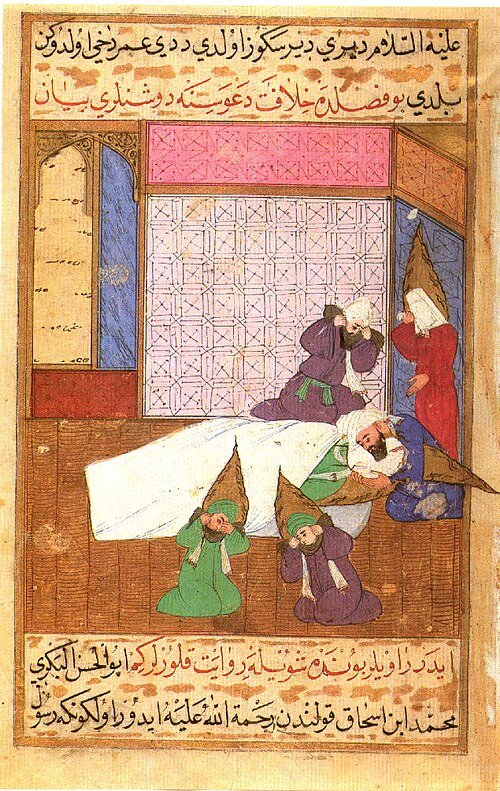
The Grief of Ali (AS), Fatimah (AS), Hasan (AS), and Husayn (AS) at the Passing of Prophet Muhammad (PBUH)
Object Type
Artist
Period / Century
Material / Technique
Subject / Theme
Description
This scene depicts the deepest sorrow in Islamic history and the indescribable pain experienced by the Ahl al-Bayt. The passing of the Prophet (PBUH) was not merely the loss of a leader, but the withdrawal of the light of revelation from the world and, for his household, the departure of a father, a grandfather, and a shelter.
Here are the historical and spiritual details of the grief experienced by the Ahl al-Bayt in those moments:
Fatimah (AS): She was the closest to her father. It is narrated that after the passing of the Messenger of Allah (PBUH), she cried out in the streets of Medina, saying, “Such calamities have poured down upon me that, had they poured down upon the days, the days would have turned into dark nights.” Unable to bear the separation from her father, she joined him only a few months later.
Imam Ali (AS): Ali (AS), who was both the brother and the successor of the Prophet (PBUH), personally washed and buried his blessed body. Though he strove to maintain his composure throughout this process, he expressed his deep sorrow with the pain of parting from his beloved, saying, “For anyone other than you, we could have endured with patience, but in the face of separation from you, patience is exhausted.”
Imam Hasan (AS) and Imam Husayn (AS): “The masters of the youth of Paradise,” who were still young children at the time, lost their greatest protector and source of love with the passing of their grandfather. Their weeping as they threw themselves upon their grandfather with their childlike hearts is recounted in Islamic sources as utterly heart-wrenching scenes.
This frame of sorrow has become synonymous in the Islamic world with the concept of “Bayt al-Aḥzān” (the House of Sorrows). This farewell of the Ahl al-Bayt:
Human Love: Demonstrates the purest and highest form of love for the Prophet (PBUH).
Shared Destiny: Marks, as it were, the beginning of the hardships and tribulations this sacred family would endure for the sake of the cause of Islam.
The Ummah Orphaned: In this scene, it is symbolized that not just a family, but the entire Muslim Ummah has entered into a state of spiritual orphanhood.
Those final moments, in which these five blessed figures were together at the time of the passing of Prophet Muhammad (PBUH), have forged a bond of love and sorrow in the hearts of Muslims that will endure until the Day of Judgement.